Ramadan at home
A visual story and daily schedule that show your child how home changes in Ramadan: fasting, iftar and suhoor, visitors and late nights.
Children aged 4 to 12 who find changes in routine, mealtimes or a busy house hard.
In this pack
- Visual story, 14 pages
- Visual schedule, 8 steps
- 2 cards to cut out
- Parent guide in Arabic and English
- Boy and girl versions
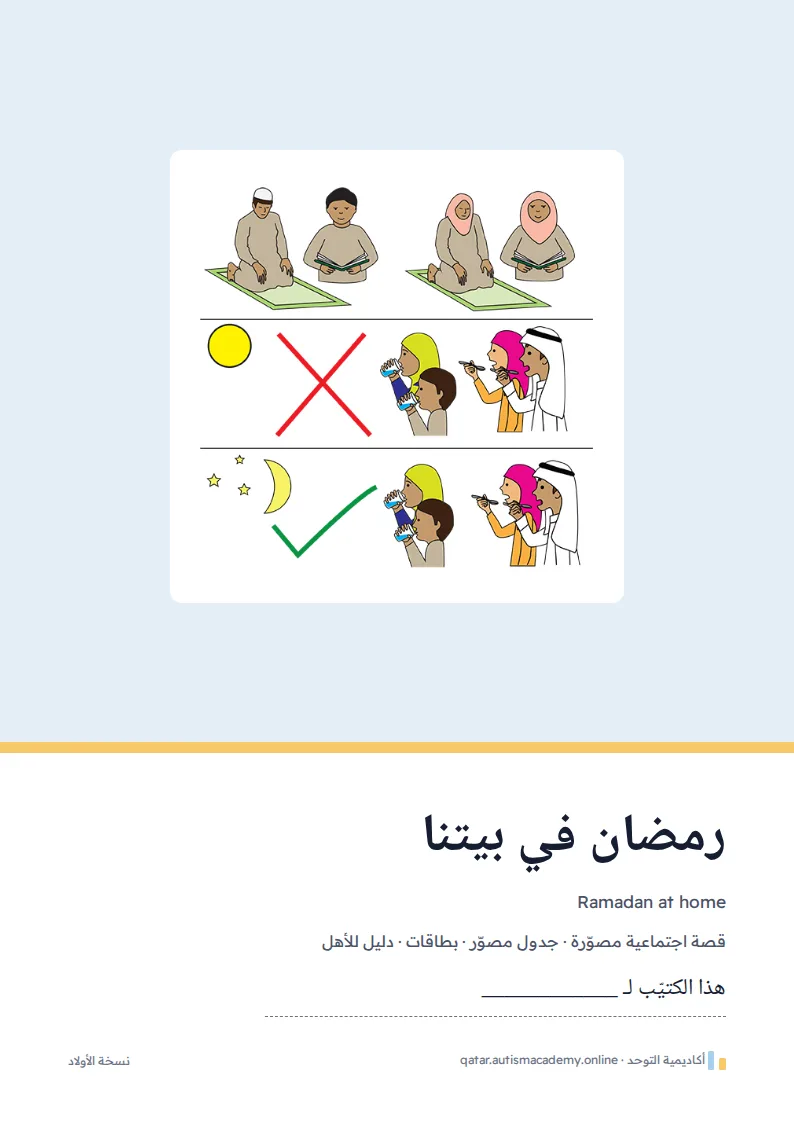
Sample pages
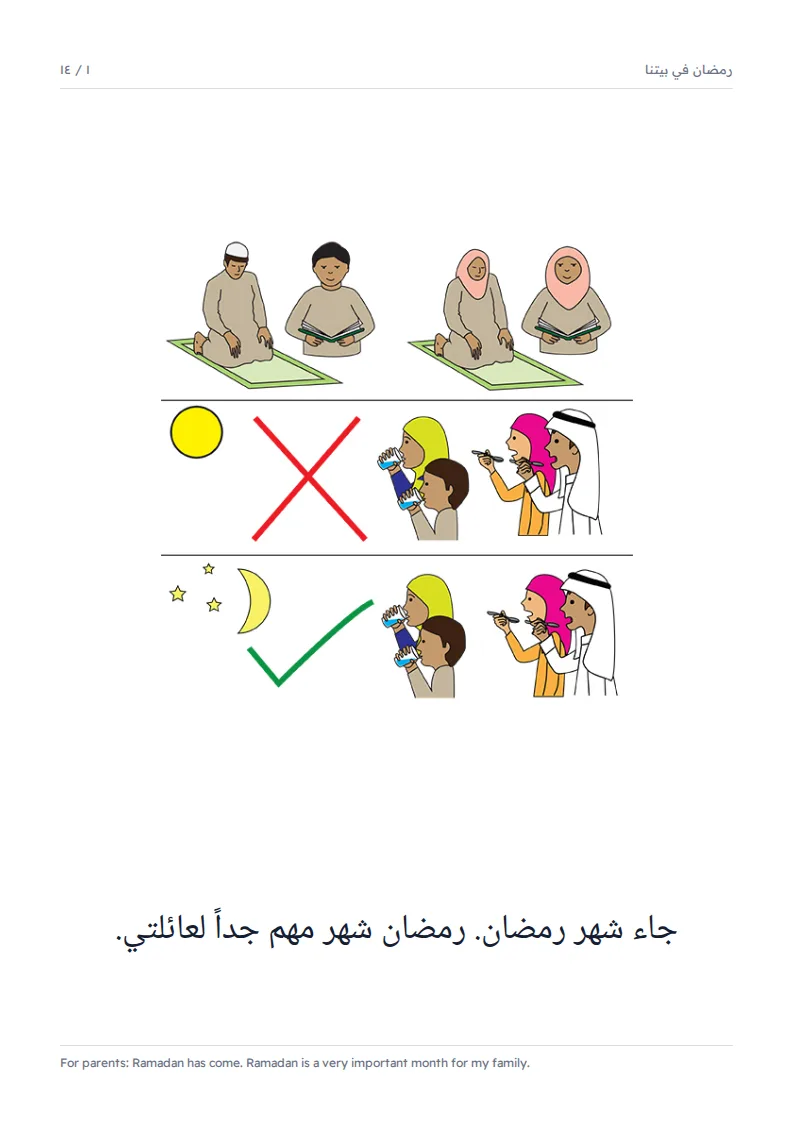
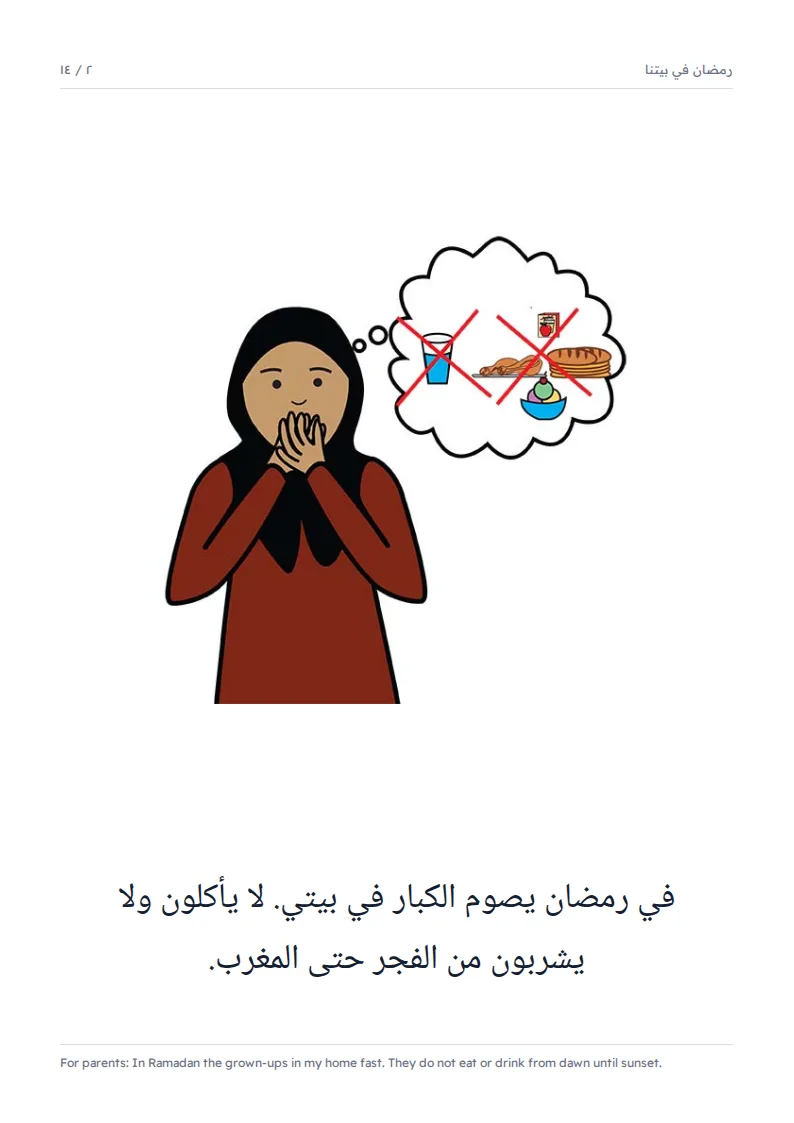
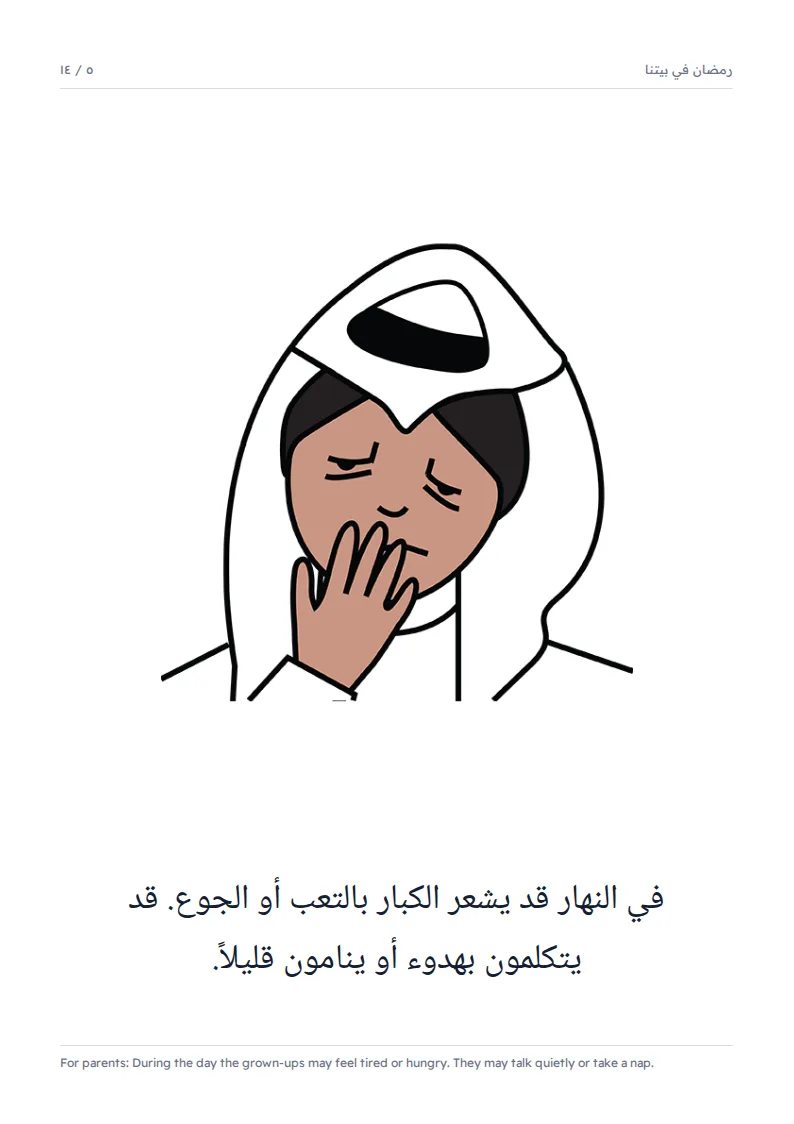
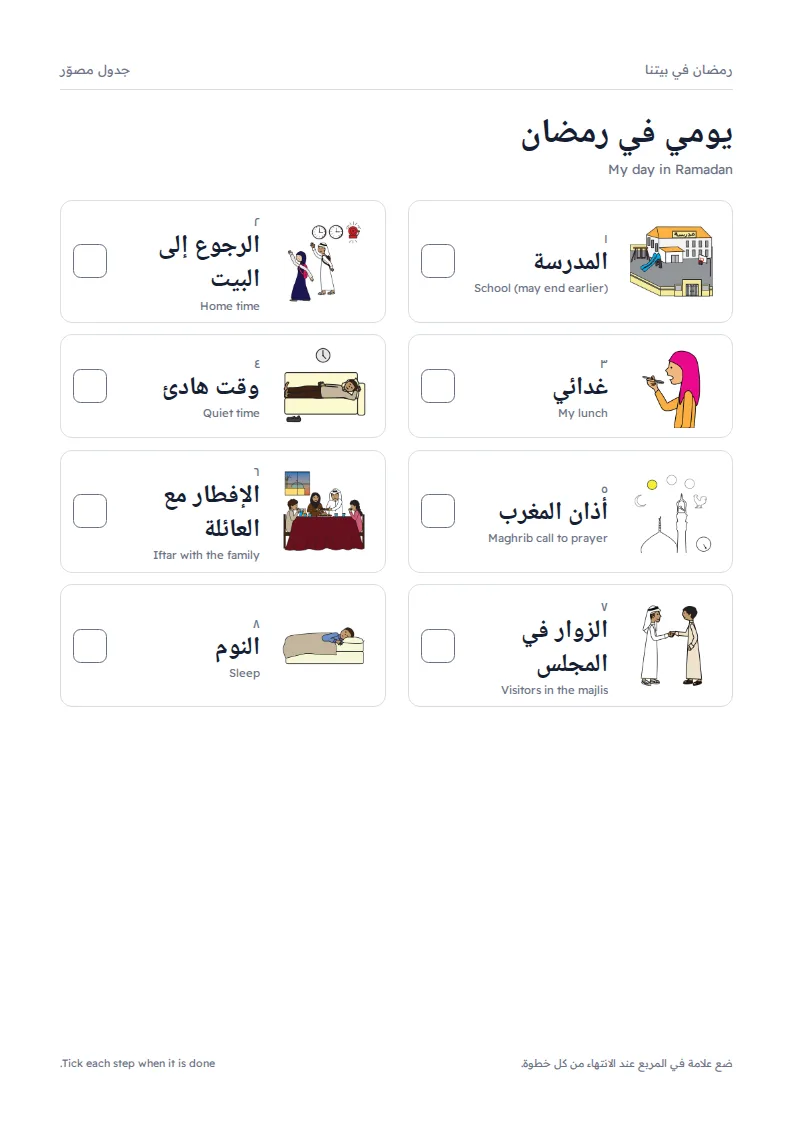
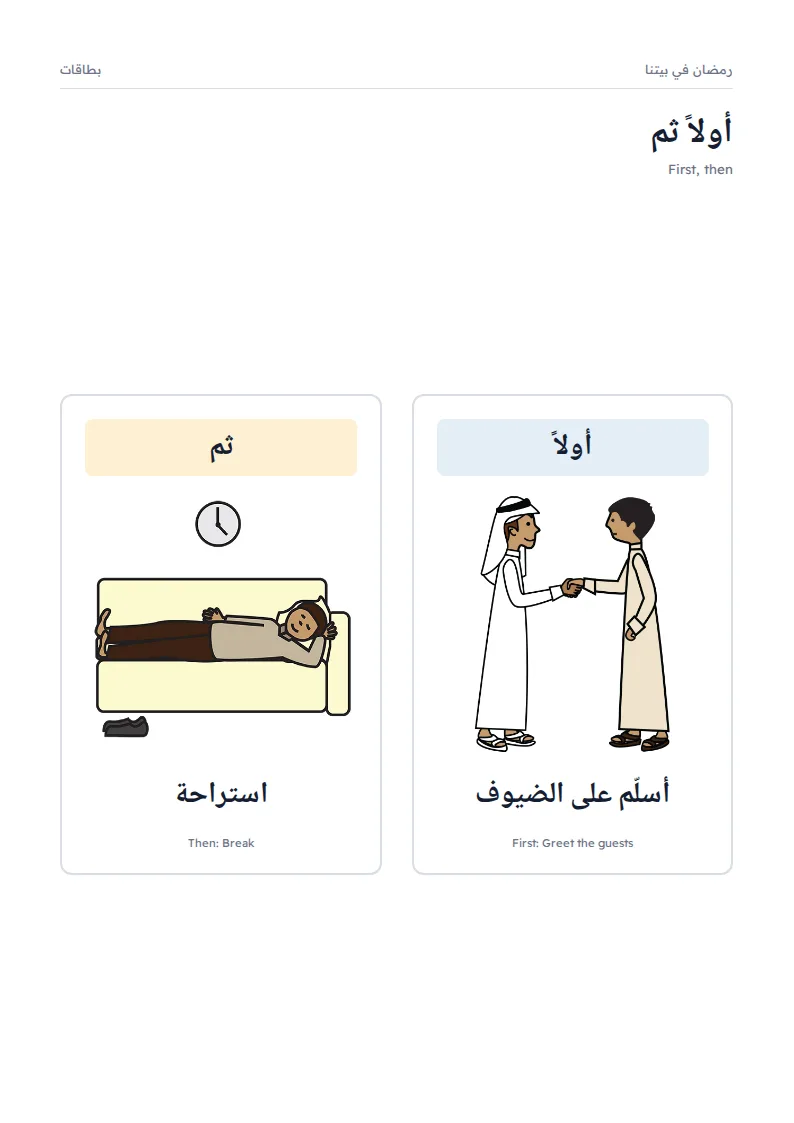
From the story, translated from the Arabic
- Ramadan has come. Ramadan is a very important month for my family.
- In Ramadan the grown-ups in my home fast. They do not eat or drink from dawn until sunset.
- I can eat and drink as usual. Mum and Dad prepare my food for me.
- Late at night the grown-ups wake up before dawn to eat suhoor. I may hear sounds from the kitchen while I am asleep.
From the parent guide
Why Ramadan can be hard for your child
Ramadan is a beloved month in our homes, but it changes almost everything about a child's day. Mealtimes move, the grown-ups stay up late, school hours change, and after sunset the house fills with visitors, voices and cooking smells. Many autistic children rely on routine to feel safe, so they may become anxious, upset or struggle to sleep in the first days of the month.
A child may also be puzzled that Mum and Dad are not eating, or that the grown-ups are tired and have less patience during the day. This story explains these changes in simple words and clear pictures, before your child lives them.
How to use the story
Read the story with your child about a week before Ramadan starts, once or twice a day, at a calm moment. Mothers and fathers can take turns. Read it in a calm voice and let your child hold the pages and turn them. You do not need to add much explanation; repetition is what helps.
Keep reading it during the first days of Ramadan. Put the daily schedule where your child can see it, such as the fridge door or their bedroom, and point to the next step during the day.
How to adapt it for your family
Every home is different. Write the names of family members on the pages if you like, and cross out any page that does not fit. If your child eats with the family at iftar, or if you do not have many visitors, change the text with a pen. If your area has only the adhan and no iftar cannon, leave out what does not apply.
The full guide, in Arabic and English, is in the pack.
Other packs in this set
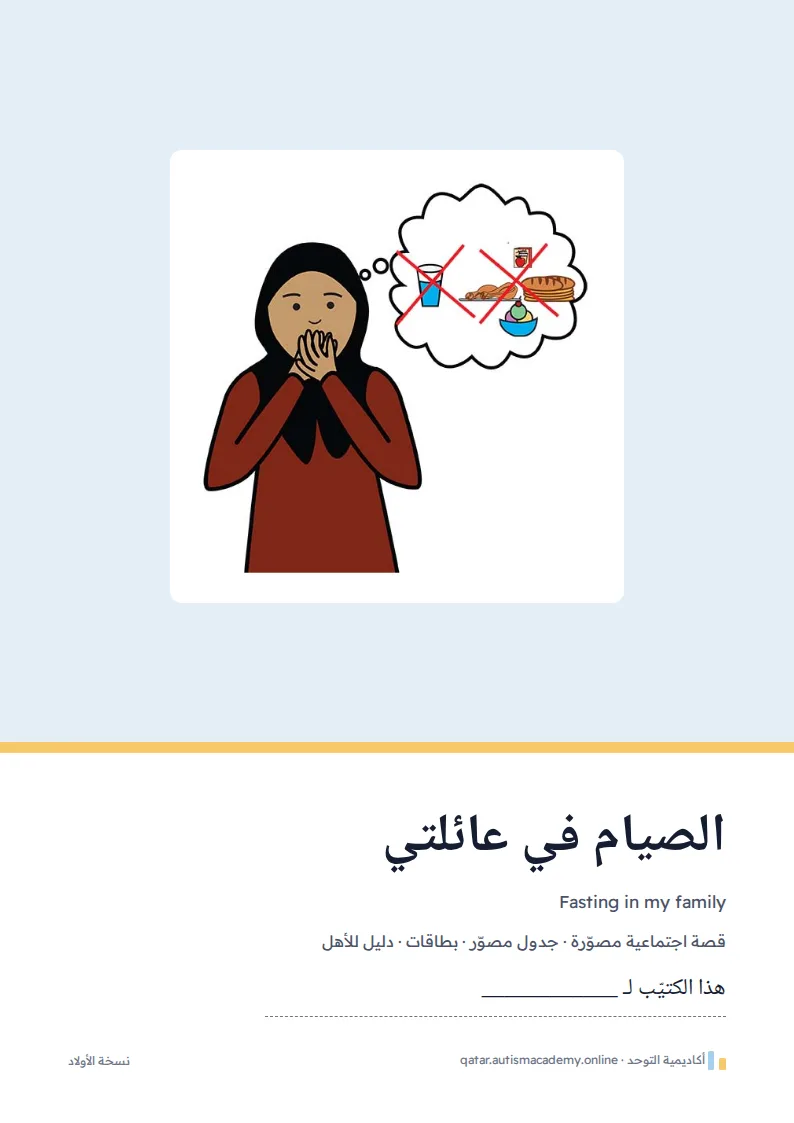
Fasting in my family
A visual story that explains why the family fasts while your child can eat, and supports a short practice fast if you and your child choose one together.

Visiting the mosque
A visual story and step-by-step schedule for a mosque visit: shoes, wudu, the rows, the imam's voice, and what your child can do if it gets too much.
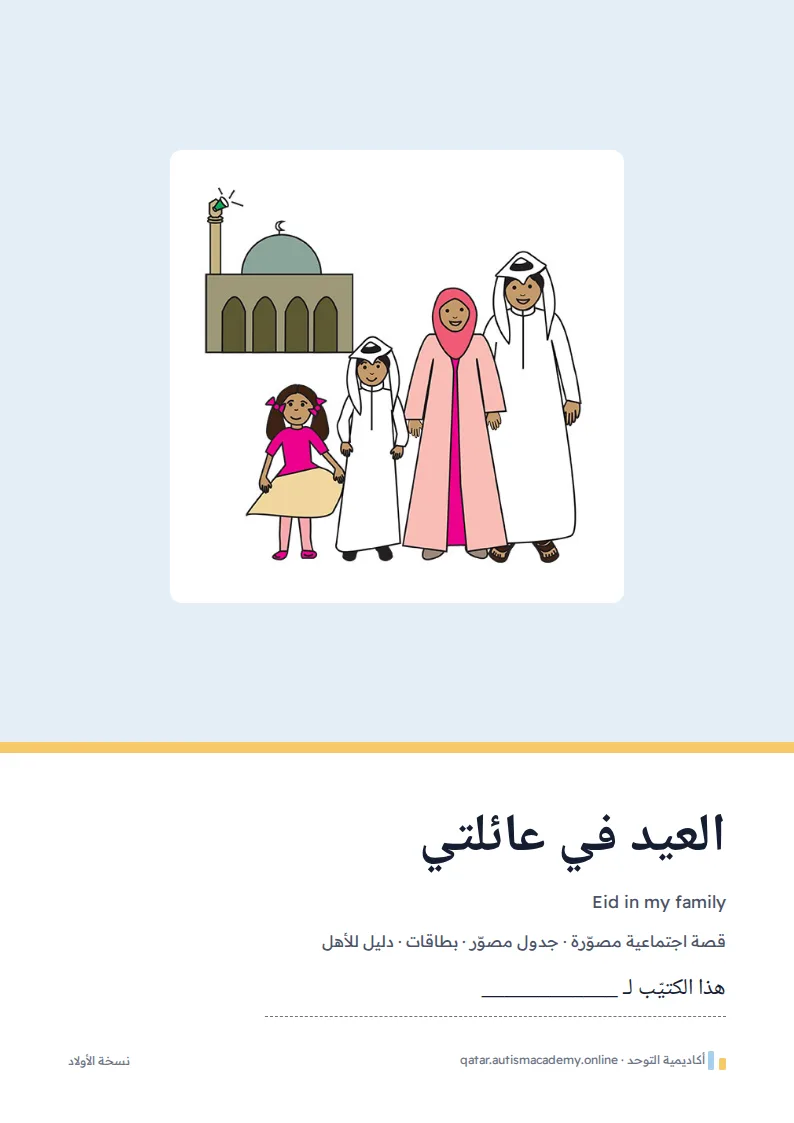
Eid in my family
A visual story, countdown and schedule for Eid day: new clothes, Eid prayer, visits, eidiya, and gentle ways to greet without kissing.