Eid in my family
A visual story, countdown and schedule for Eid day: new clothes, Eid prayer, visits, eidiya, and gentle ways to greet without kissing.
Children aged 4 to 12 who find crowds, noise and kissing tiring, or struggle with new clothes and sudden change.
In this pack
- Visual story, 14 pages
- Visual schedule, 8 steps
- 3 cards to cut out
- Parent guide in Arabic and English
- Boy and girl versions
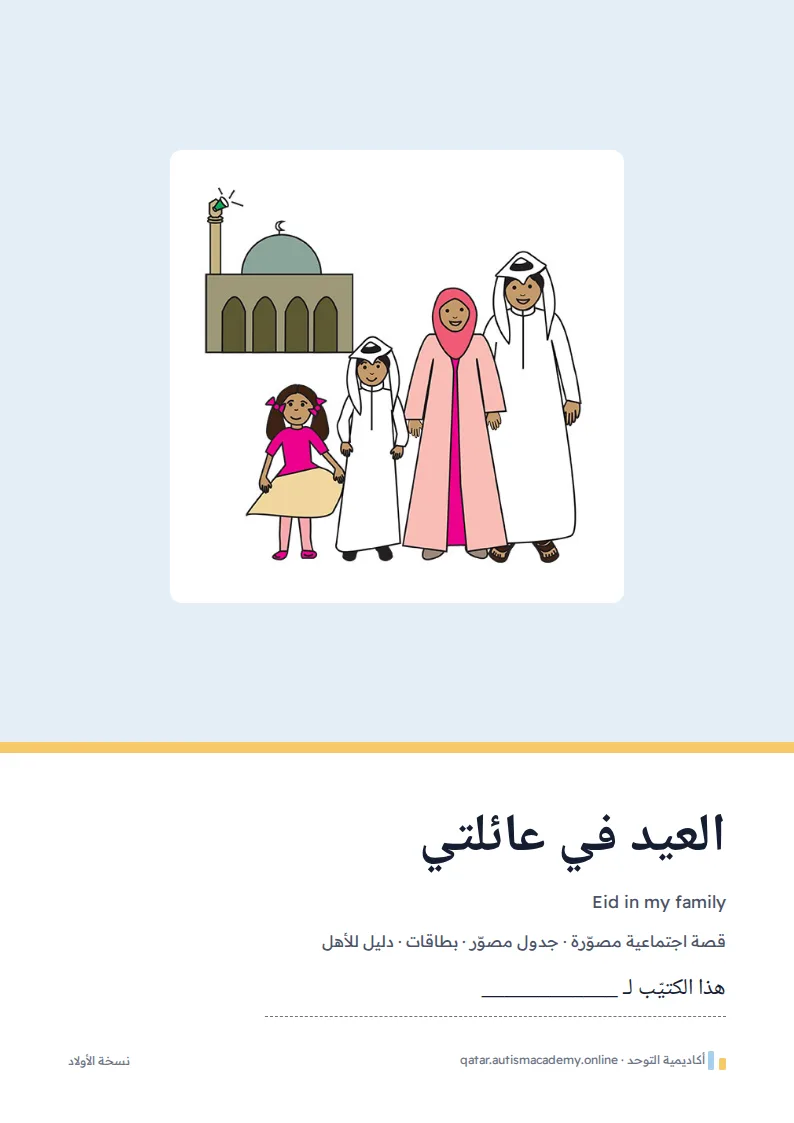
Sample pages
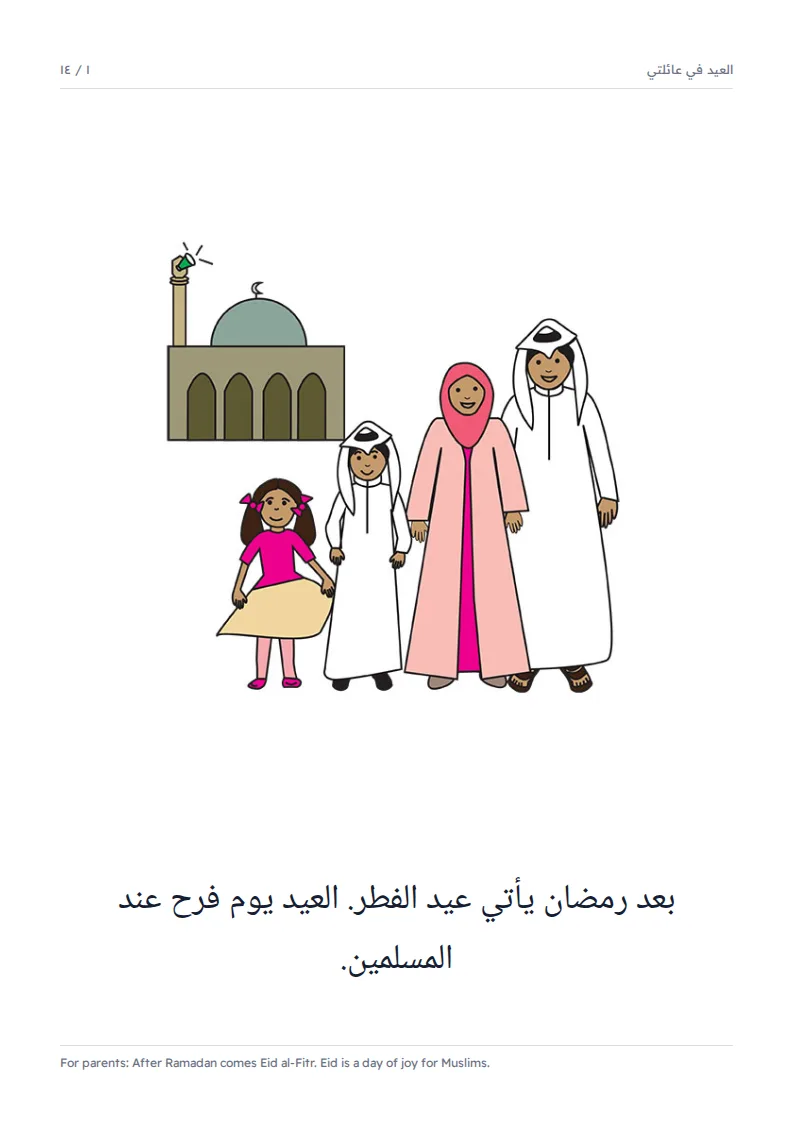
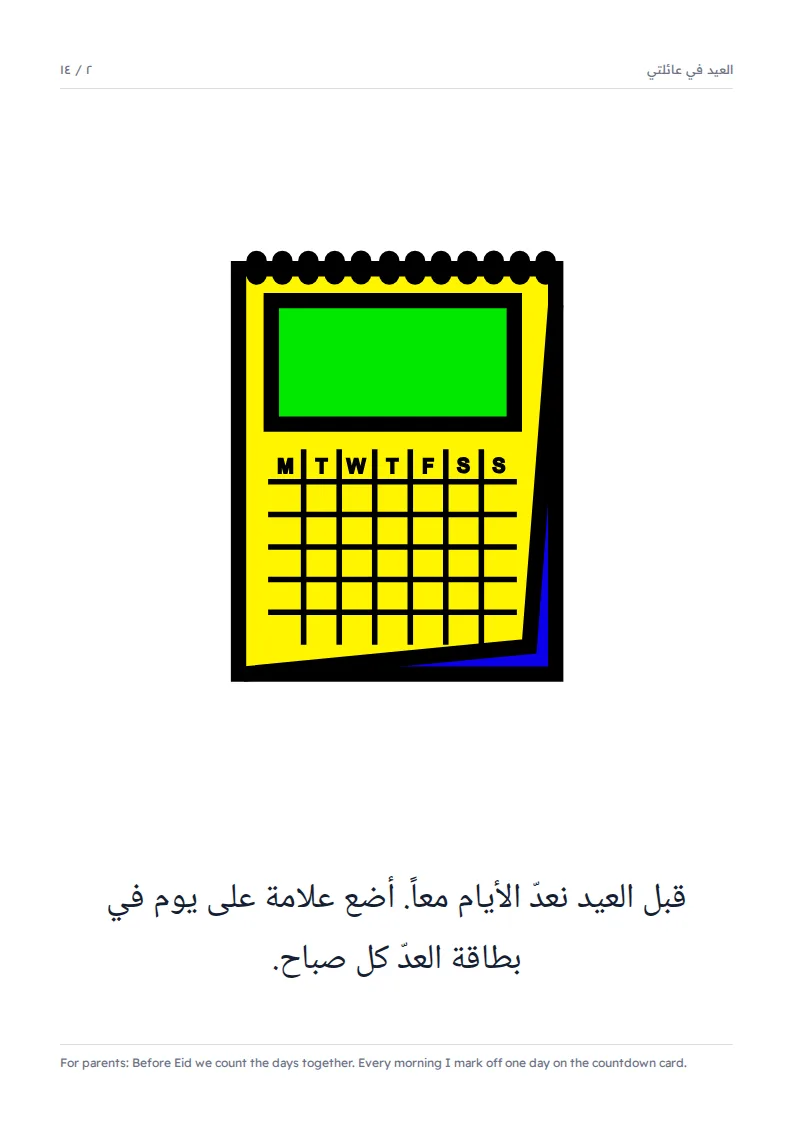
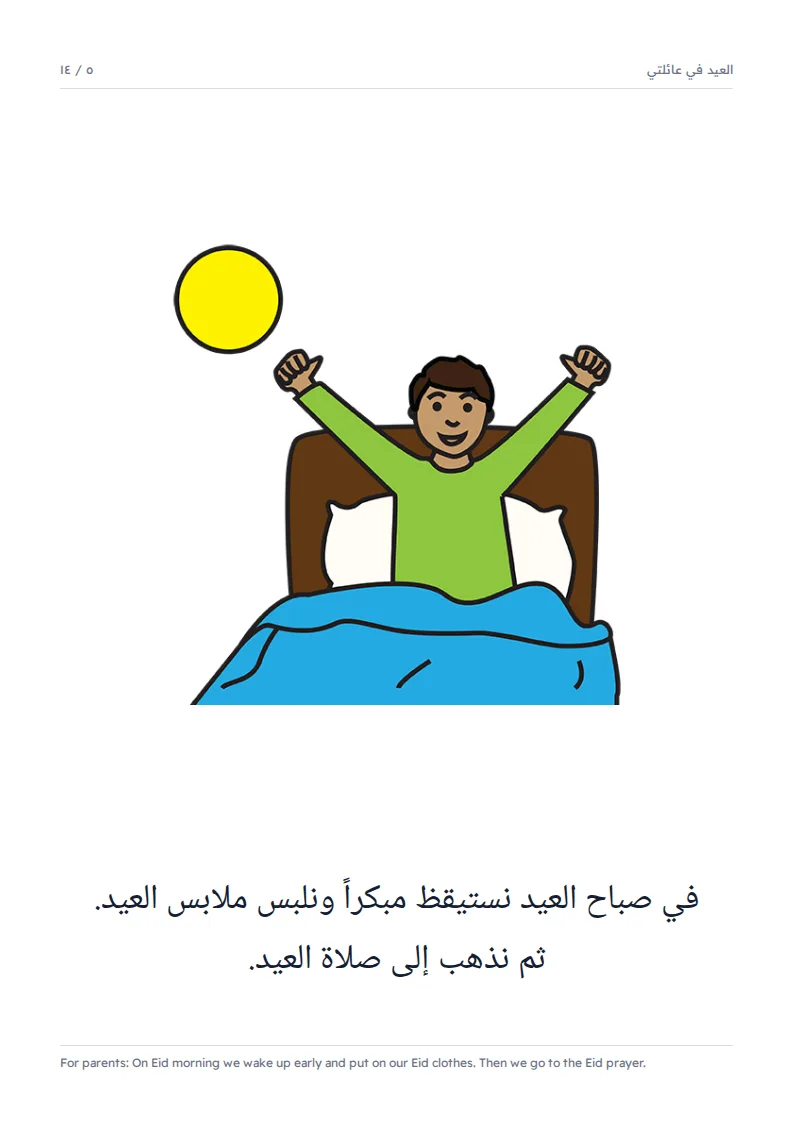
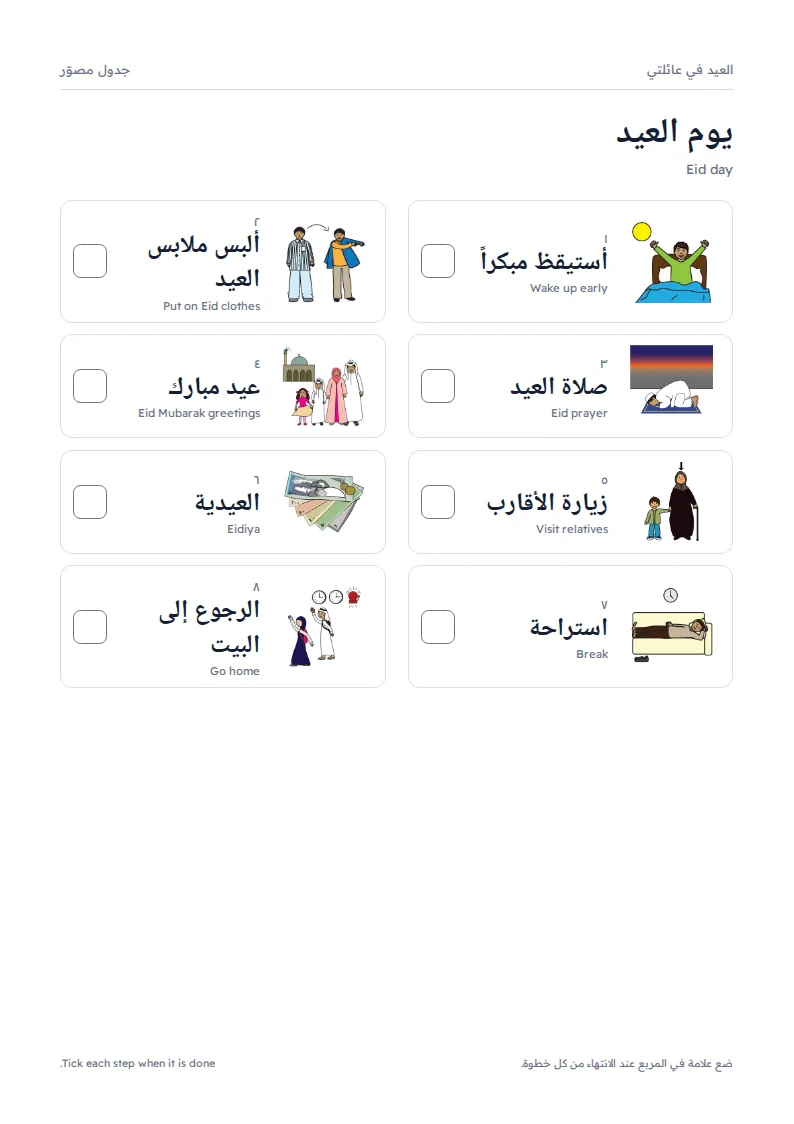
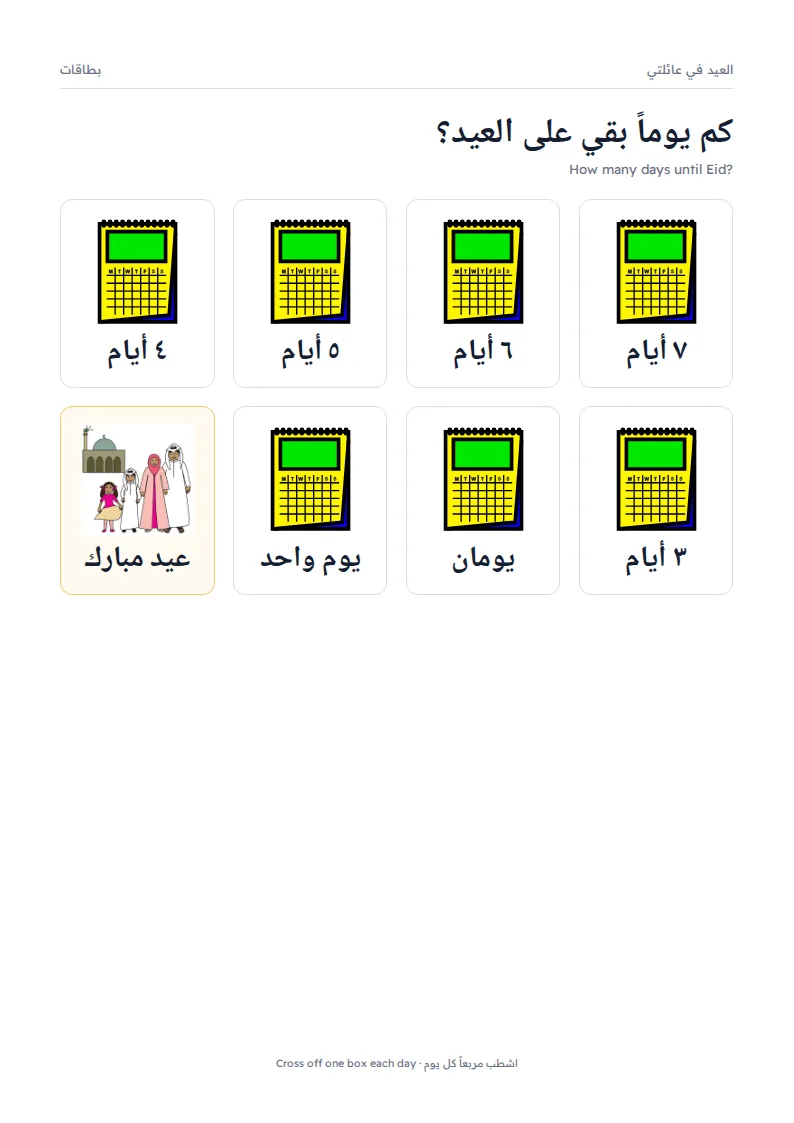
From the story, translated from the Arabic
- After Ramadan comes Eid al-Fitr. Eid is a day of joy for Muslims.
- Before Eid we count the days together. Every morning I mark off one day on the countdown card.
- We buy new clothes for Eid. The fabric may feel rough, or there may be a tag that scratches my skin.
- I can wear my Eid clothes before Eid to try them. I can ask for the tag to be cut off.
From the parent guide
Why Eid can be hard for your child
Eid is a great joy, but it packs into one day everything that can overwhelm an autistic child: waking early, new clothes with their fabric and tags, a crowded prayer, one visit after another, many relatives kissing and hugging, children, noise, and the smell of bukhoor and food. Because everyone expects the child to be happy, parents may feel embarrassed if their child gets upset or has a meltdown.
This story prepares your child for what will happen, and gives accepted ways to greet without kissing and to ask for a break. It works for Eid al-Adha too: just change the first page, and add the sacrifice if your family does one.
How to use the story
Start reading the story about a week before Eid, once a day at a calm moment and in a calm voice. Either parent can read it; let your child hold it and turn the pages. Use the countdown card every morning and let your child make the mark. Before Eid day, put the schedule up where your child can see it.
Adapt the story to your family: write in the names of the relatives you will visit, and cross out pages that do not apply. If the girls in your family do or do not attend Eid prayer, or if you pray at the mosque or an open prayer ground, change the text with a pen. The end of Ramadan can come a day earlier or later than expected, so tell your child that the date is announced when the new moon is sighted.
New clothes
Buy the Eid clothes early if you can, and wash them before wearing so they are softer. Cut out tags, choose fabric your child can tolerate, and let your child wear the clothes at home a few times before Eid. It is fine if your child wears a familiar, comfortable layer underneath.
The full guide, in Arabic and English, is in the pack.
Other packs in this set
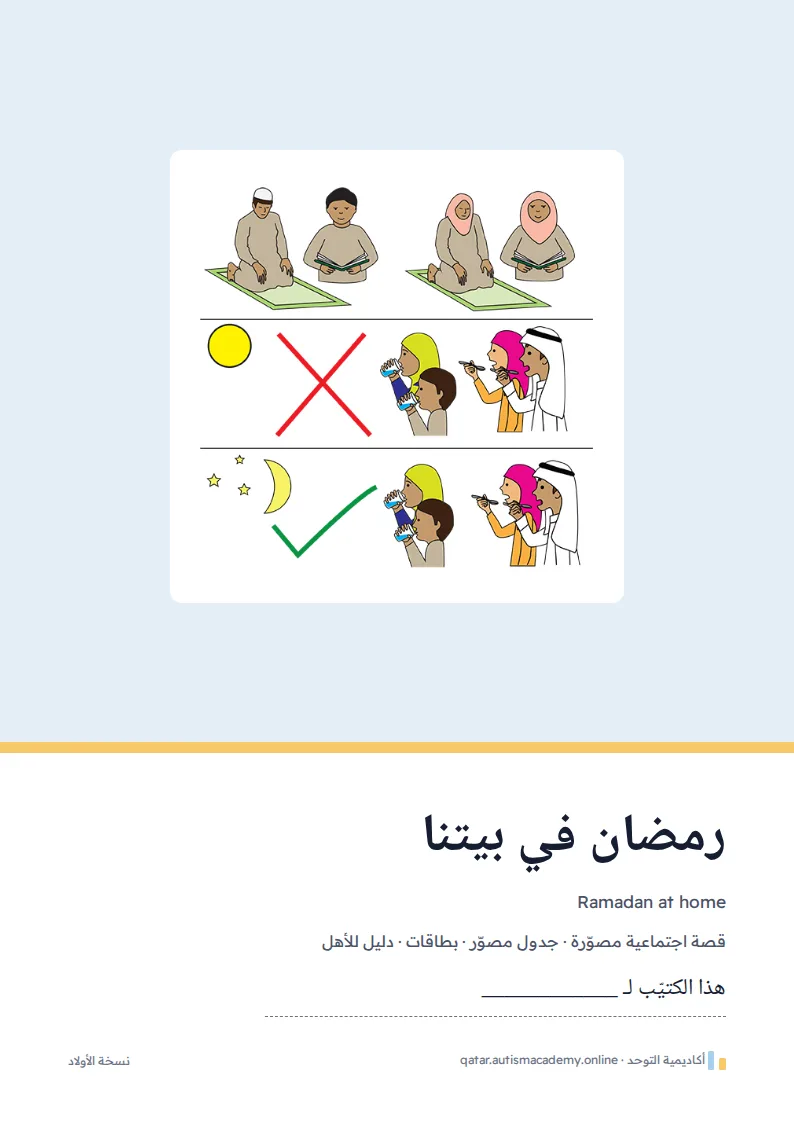
Ramadan at home
A visual story and daily schedule that show your child how home changes in Ramadan: fasting, iftar and suhoor, visitors and late nights.
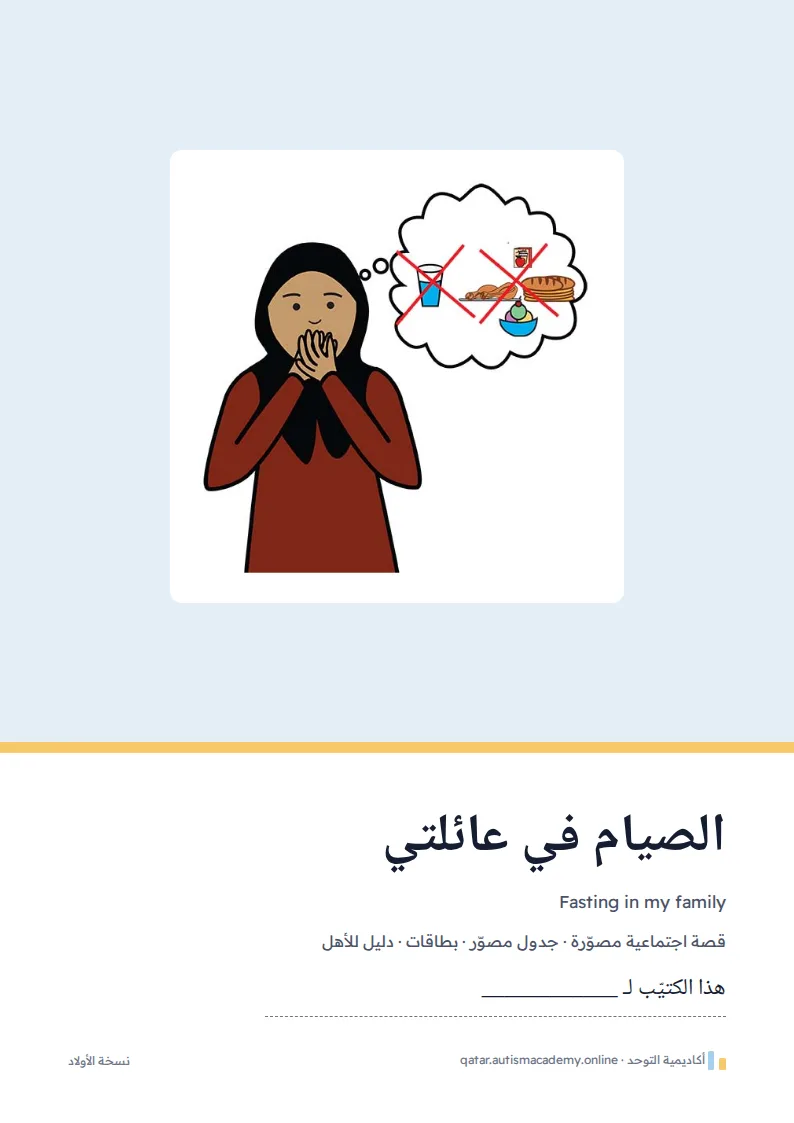
Fasting in my family
A visual story that explains why the family fasts while your child can eat, and supports a short practice fast if you and your child choose one together.
Visiting the mosque
A visual story and step-by-step schedule for a mosque visit: shoes, wudu, the rows, the imam's voice, and what your child can do if it gets too much.