Visiting the mosque
A visual story and step-by-step schedule for a mosque visit: shoes, wudu, the rows, the imam's voice, and what your child can do if it gets too much.
Children aged 4 to 12 who go or will go to the mosque, especially those who find loud sounds, crowds or people close by hard.
In this pack
- Visual story, 13 pages
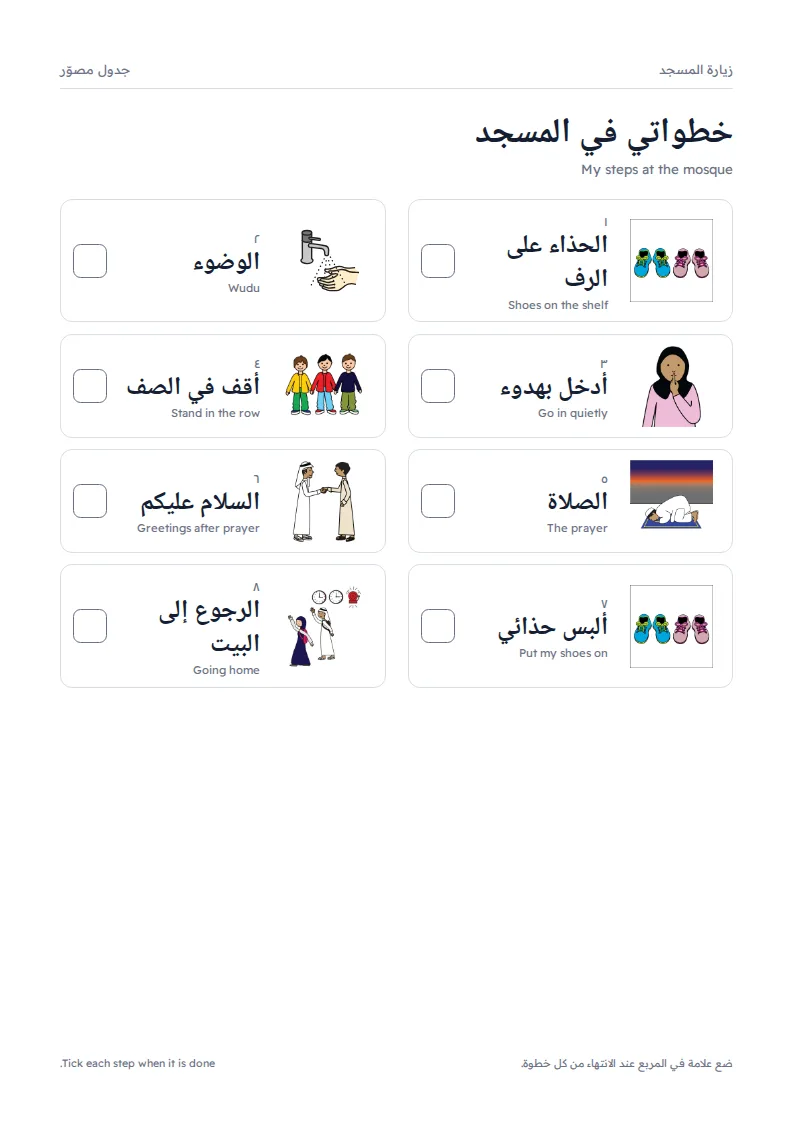
- Visual schedule, 8 steps
- 2 cards to cut out
- Parent guide in Arabic and English
- Boy and girl versions

Sample pages
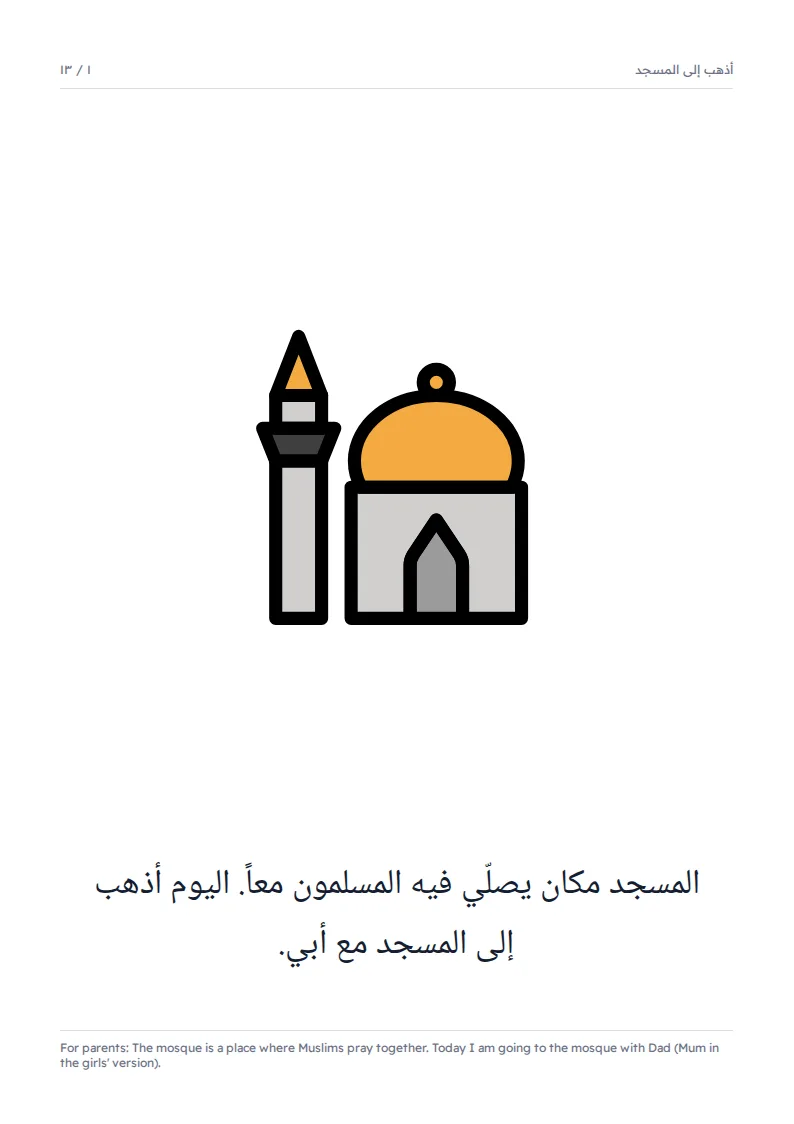
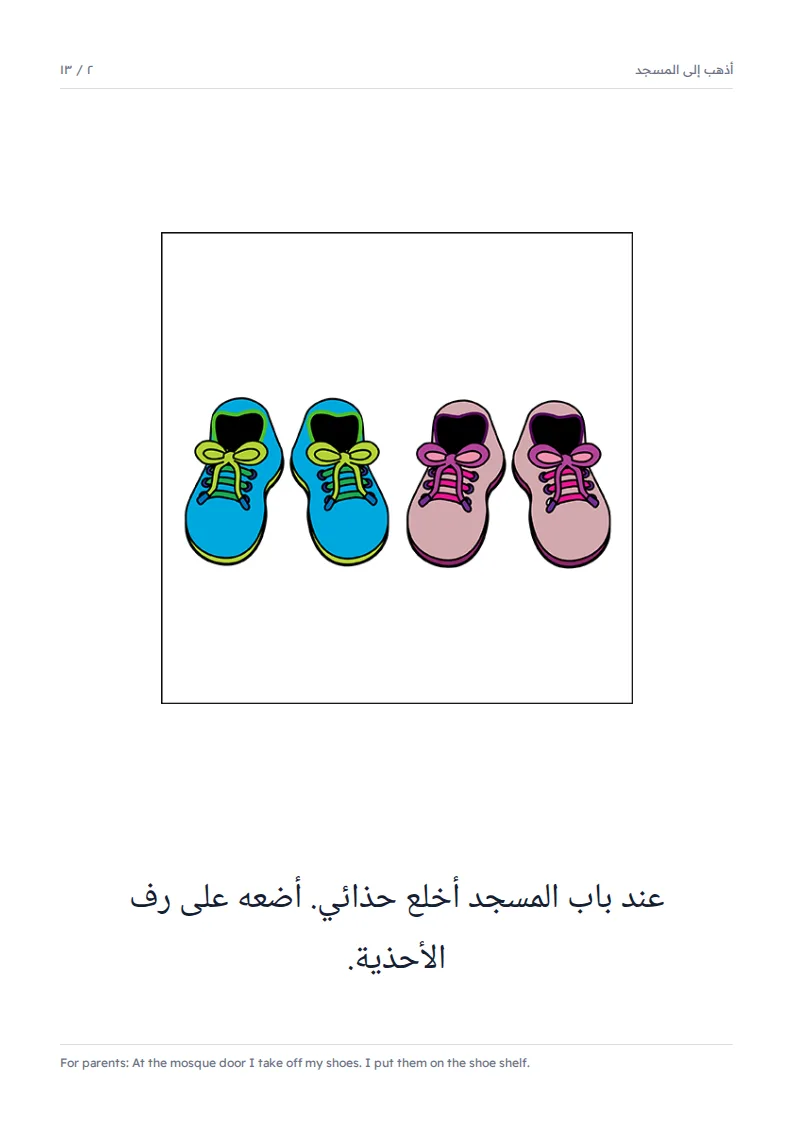
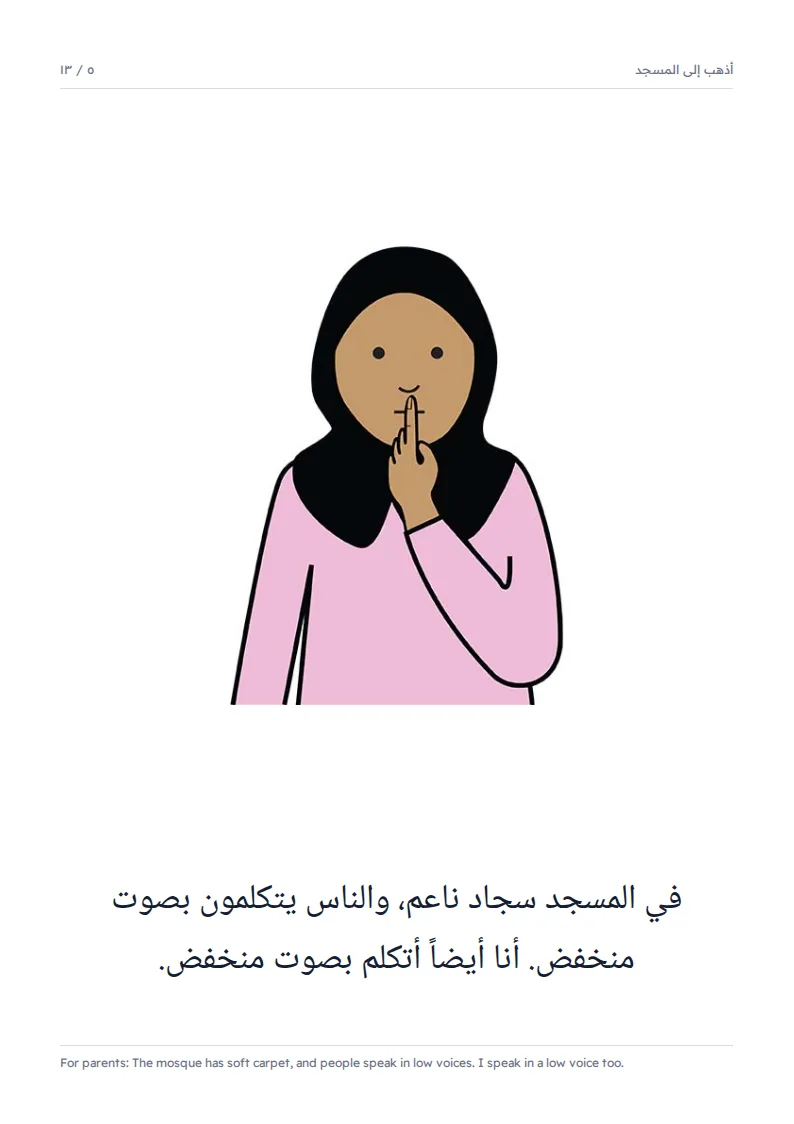
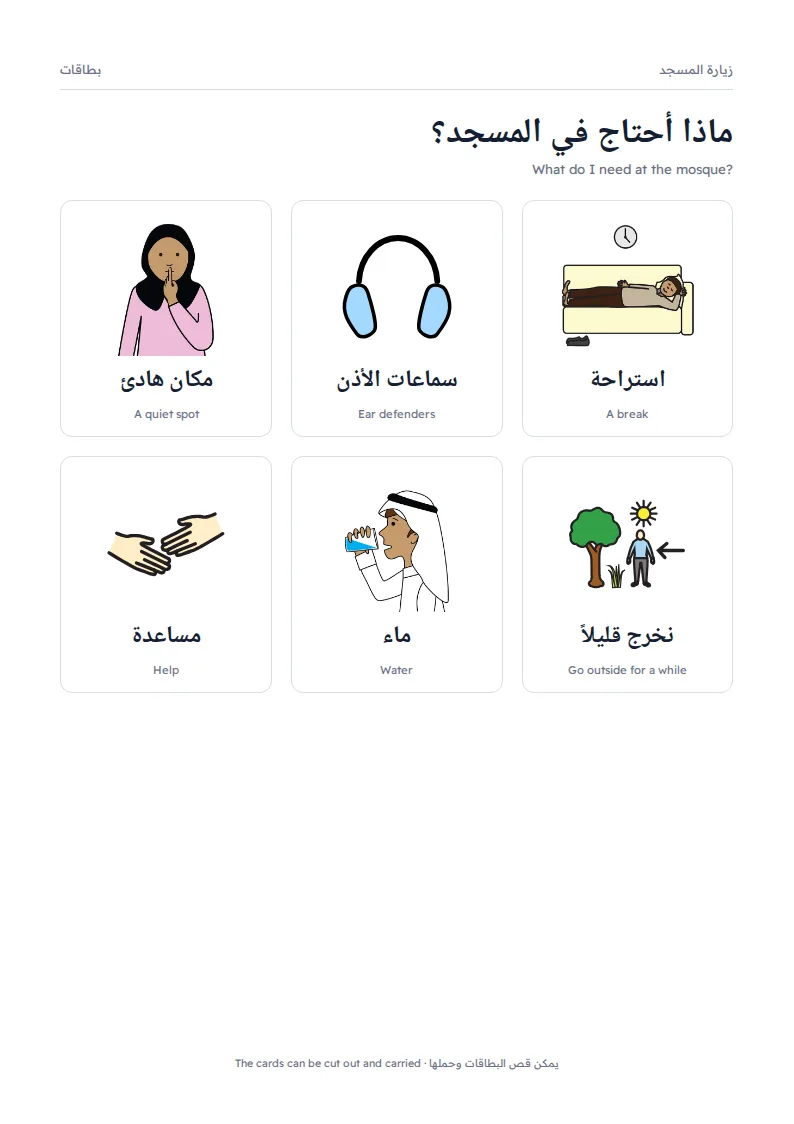
From the story, translated from the Arabic
- The mosque is a place where Muslims pray together. Today I am going to the mosque with Dad (Mum in the girls' version).
- At the mosque door I take off my shoes. I put them on the shoe shelf.
- Before praying we do wudu with water. Dad (Mum in the girls' version) teaches me the steps of wudu one by one.
- The water may be cold or warm. My sleeves may get a little wet, then they dry.
From the parent guide
Why a mosque visit can be hard for your child
The mosque is calm most of the time, but it brings many sensory challenges for an autistic child: taking off shoes and the feel of the carpet, wudu water on the hands, face and feet, the imam's voice through the speakers, standing in a row close to strangers, and being expected to stay quiet and still for a long time. At Friday prayer or in Ramadan the mosque is even busier.
This story introduces the steps of the visit before your child goes, and gives clear ways to ask for a break or for help. The aim is a visit your child can manage and want to repeat, not completing the whole prayer the first time.
Practice varies between families
Families and mosques differ in the details. Some girls go with their mother to the women's section, others go with their father while they are small. Some children start with a short prayer, others with Friday prayer. The steps and order of wudu, and what is said in the prayer, are for your family to teach, so the story deliberately leaves them out. Follow your family's practice, and ask the imam if you need to.
How to use the story
Read the story with your child for several days before the visit, at a calm moment and in a calm voice, and let your child hold it and turn the pages. Either parent can read it; ideally the person who will go along. Write the name of the mosque on the first page, and take a photo of its door and shoe shelf if you can.
Adapt it to your family: change who goes along, and cross out the wudu page if you do wudu at home. You can also practise wudu at home a few times before the visit.
The full guide, in Arabic and English, is in the pack.
Other packs in this set
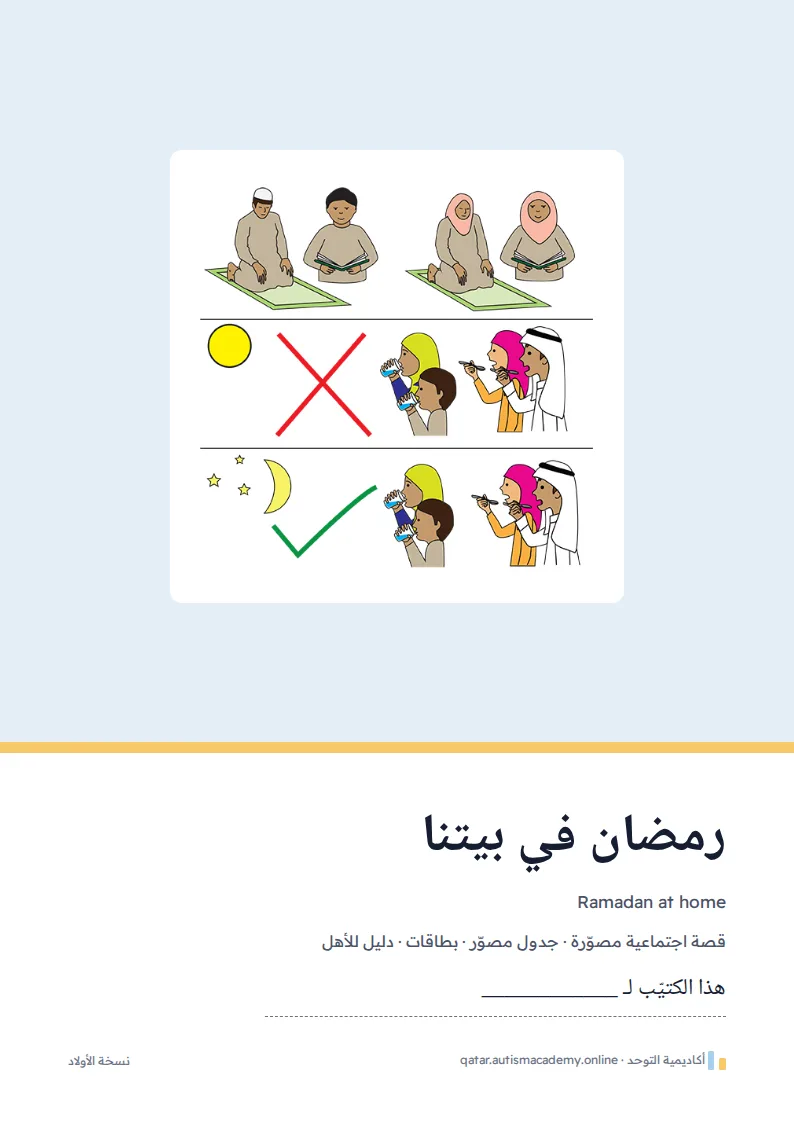
Ramadan at home
A visual story and daily schedule that show your child how home changes in Ramadan: fasting, iftar and suhoor, visitors and late nights.
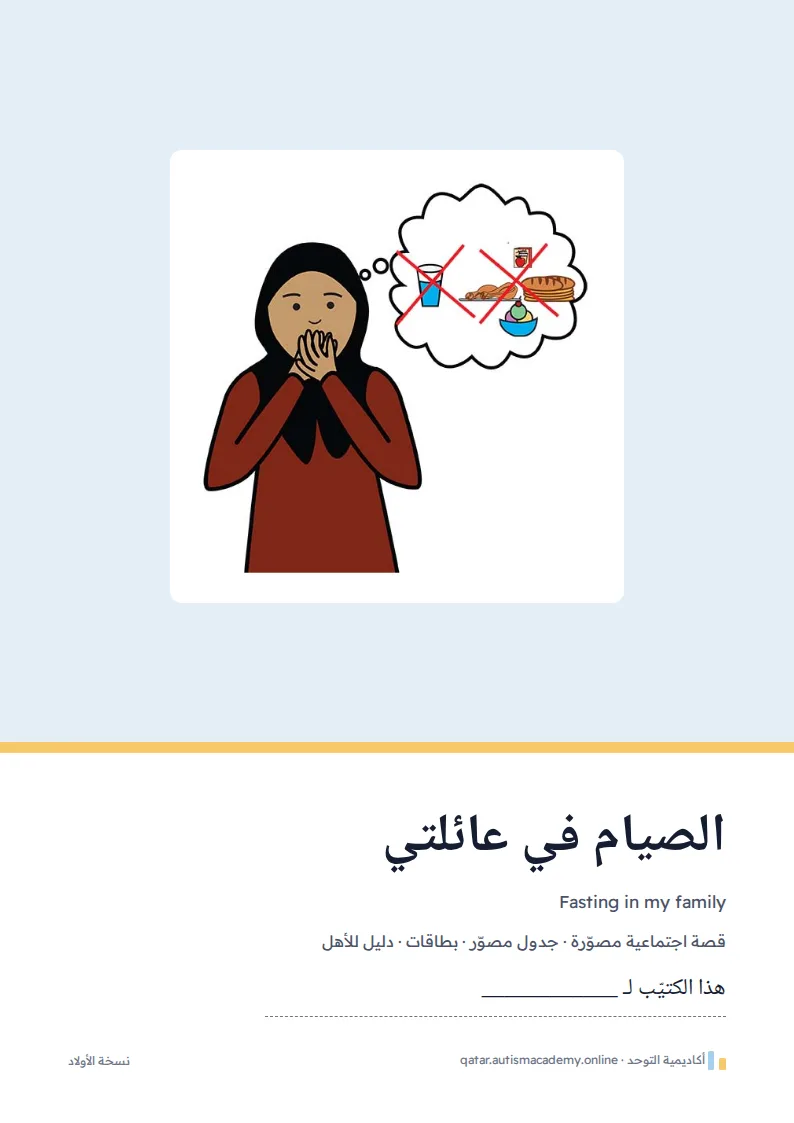
Fasting in my family
A visual story that explains why the family fasts while your child can eat, and supports a short practice fast if you and your child choose one together.
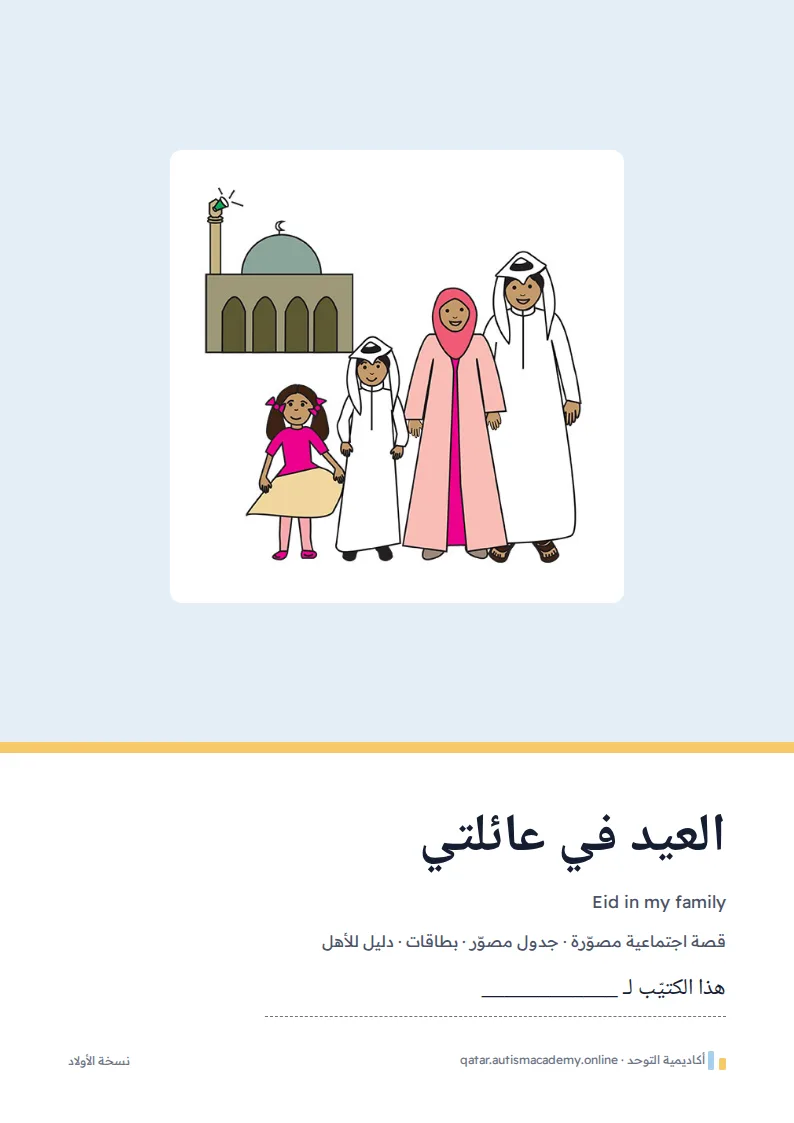
Eid in my family
A visual story, countdown and schedule for Eid day: new clothes, Eid prayer, visits, eidiya, and gentle ways to greet without kissing.