Fasting in my family
A visual story that explains why the family fasts while your child can eat, and supports a short practice fast if you and your child choose one together.
Children aged 4 to 12 who ask about fasting, are unsettled when their family does not eat, or want to try it themselves.
In this pack
- Visual story, 13 pages
- Visual schedule, 7 steps
- 2 cards to cut out
- Parent guide in Arabic and English
- Boy and girl versions
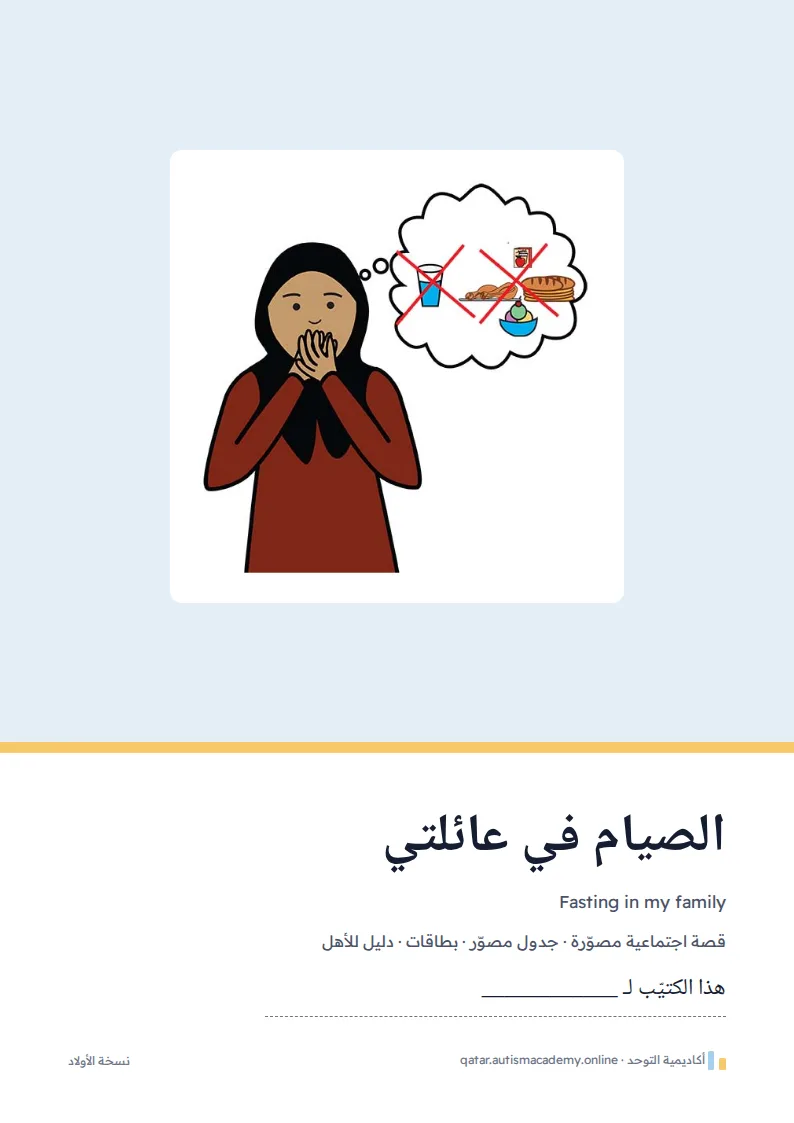
Sample pages
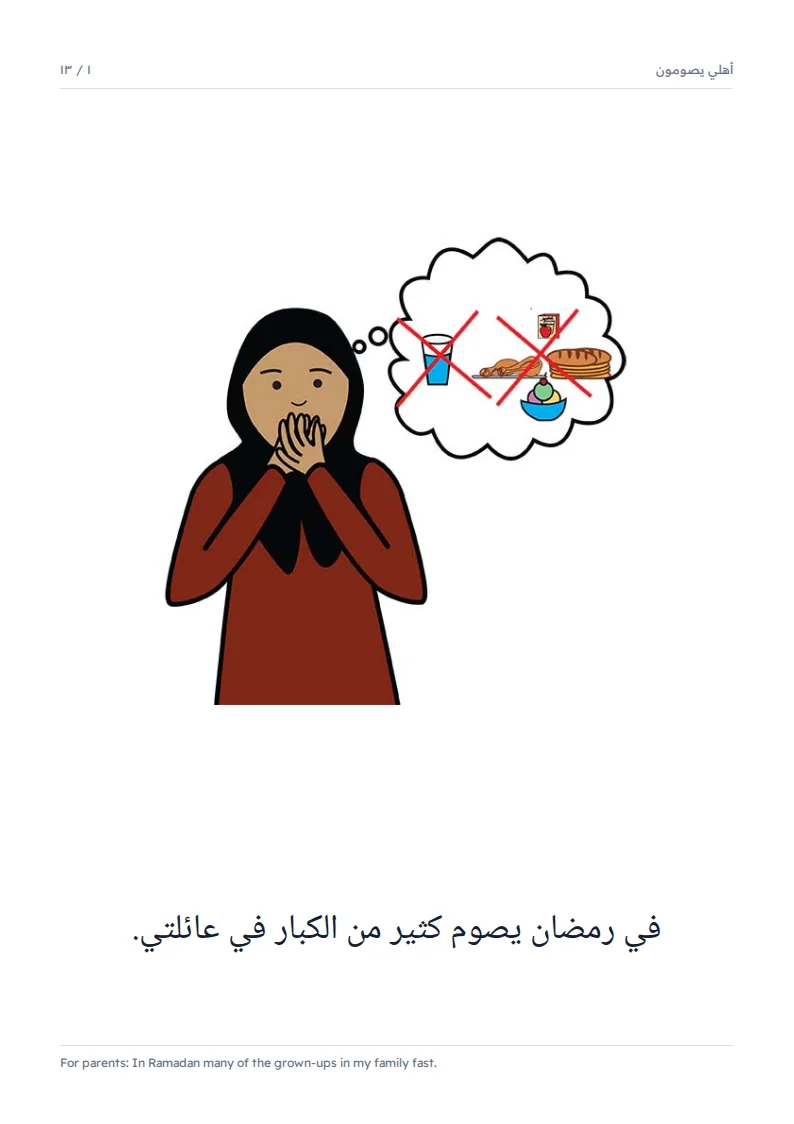
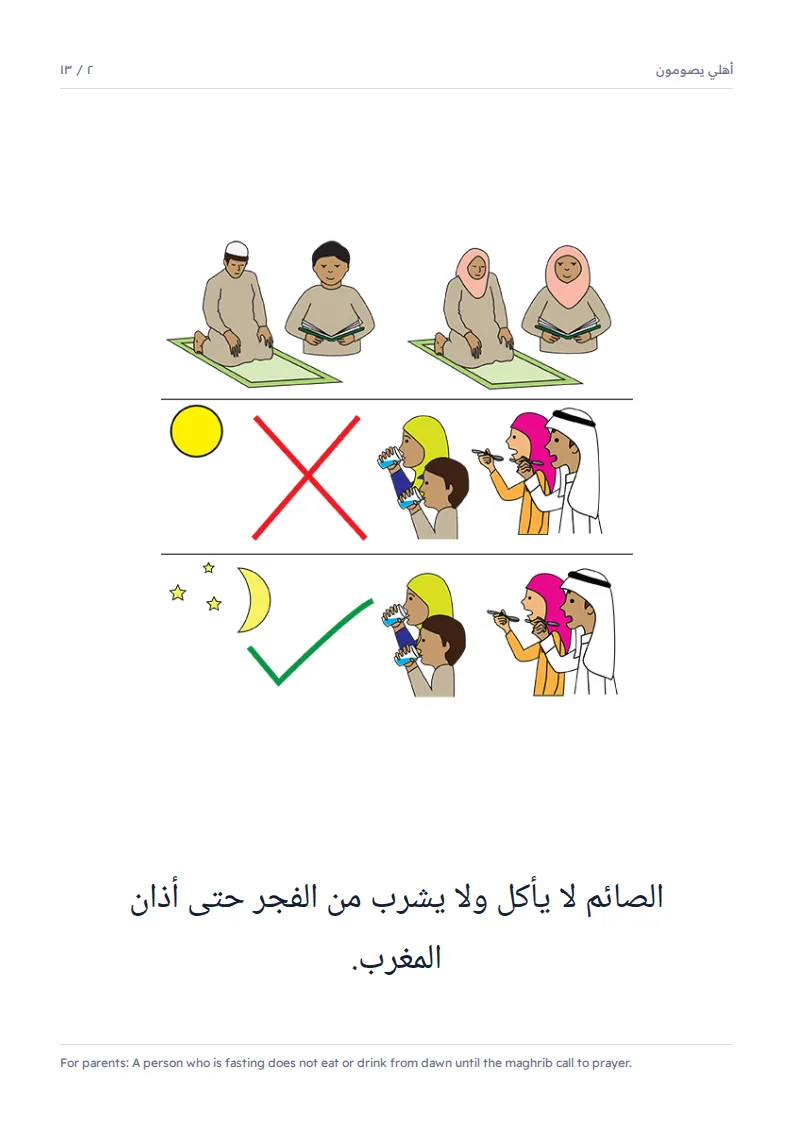
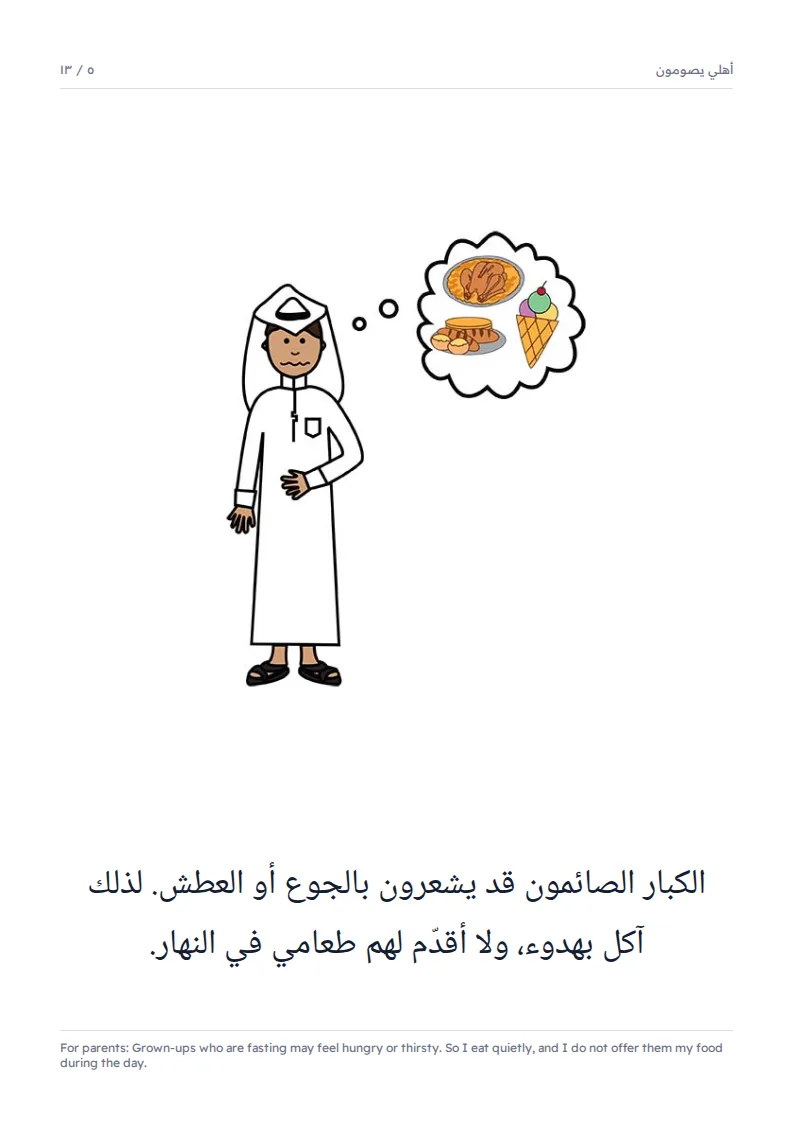
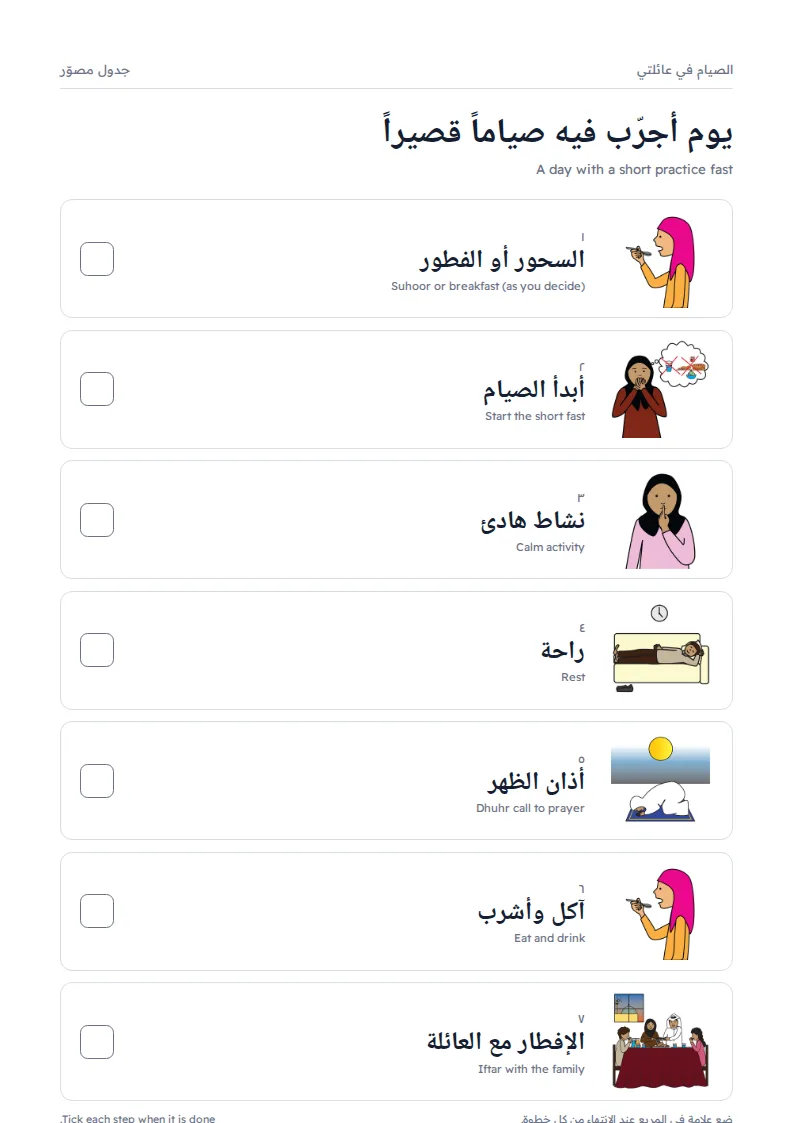
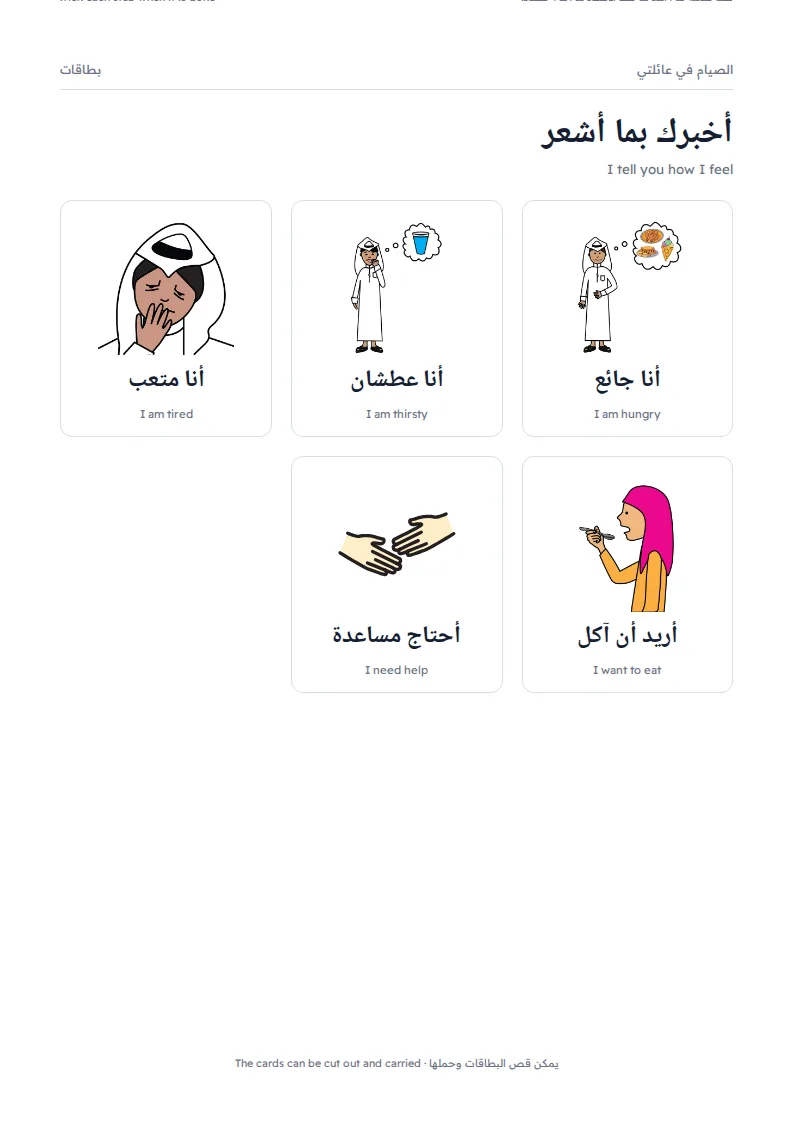
From the story, translated from the Arabic
- In Ramadan many of the grown-ups in my family fast.
- A person who is fasting does not eat or drink from dawn until the maghrib call to prayer.
- Young children do not have to fast. I can eat and drink during the day.
- In my family I eat in the kitchen, or in a place my family and I agree on.
From the parent guide
Why fasting can be a hard topic
Your child sees Mum, Dad and older siblings go all day without eating, and may not understand why. Some autistic children worry about this, insist that everyone eats at the usual time, or feel awkward eating alone. Others hear about fasting at school or from cousins and want to fast a whole day straight away.
This story has two sides. The first explains that the family fasts while your child can eat, where to eat and how to be considerate of others. The second is for a child who wants to try: a short fast of a few hours, agreed with Mum and Dad first.
Fasting is a choice, not a duty, for your child
Children are not obliged to fast before puberty. A short practice fast is a choice, and it should never be presented to your child as a duty or a test. If your child does not want to try, simply cross out the practice pages.
Before any practice fast, check with your child's doctor, especially if your child takes regular medication, has feeding difficulties or very selective eating, is underweight, or has another health condition. Some medicines need food or drink at set times. For religious matters where families differ, follow your family's practice or ask your imam.
How to use the story
Read the story a few days before Ramadan and repeat it in the first days of the month. Either parent can read it at a calm moment, in a calm voice, letting your child hold it and turn the pages. If your child decides to try, read the practice pages the night before and on the morning itself.
Adapt the story to your home: write in where your child eats, and change the time the practice fast ends. Some families start with just an hour or two, others choose dhuhr or asr, and some people call this "sparrow fasting". Choose what suits your child's age and health.
The full guide, in Arabic and English, is in the pack.
Other packs in this set
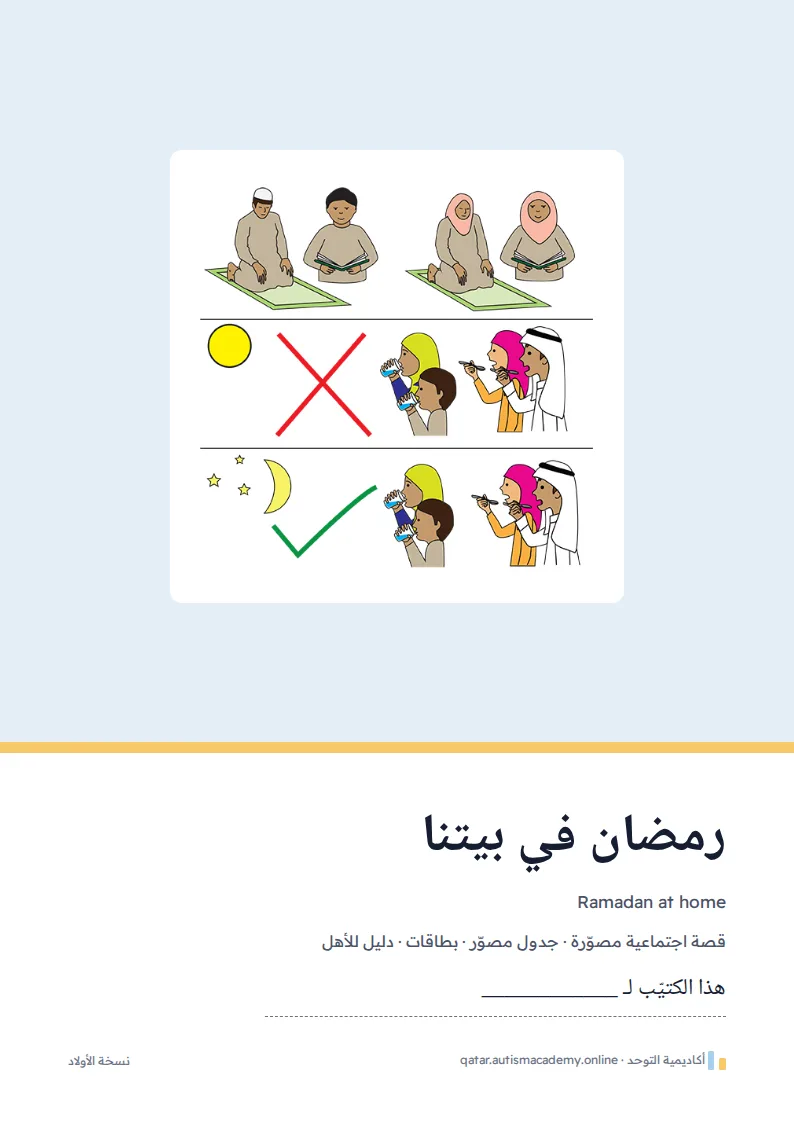
Ramadan at home
A visual story and daily schedule that show your child how home changes in Ramadan: fasting, iftar and suhoor, visitors and late nights.

Visiting the mosque
A visual story and step-by-step schedule for a mosque visit: shoes, wudu, the rows, the imam's voice, and what your child can do if it gets too much.
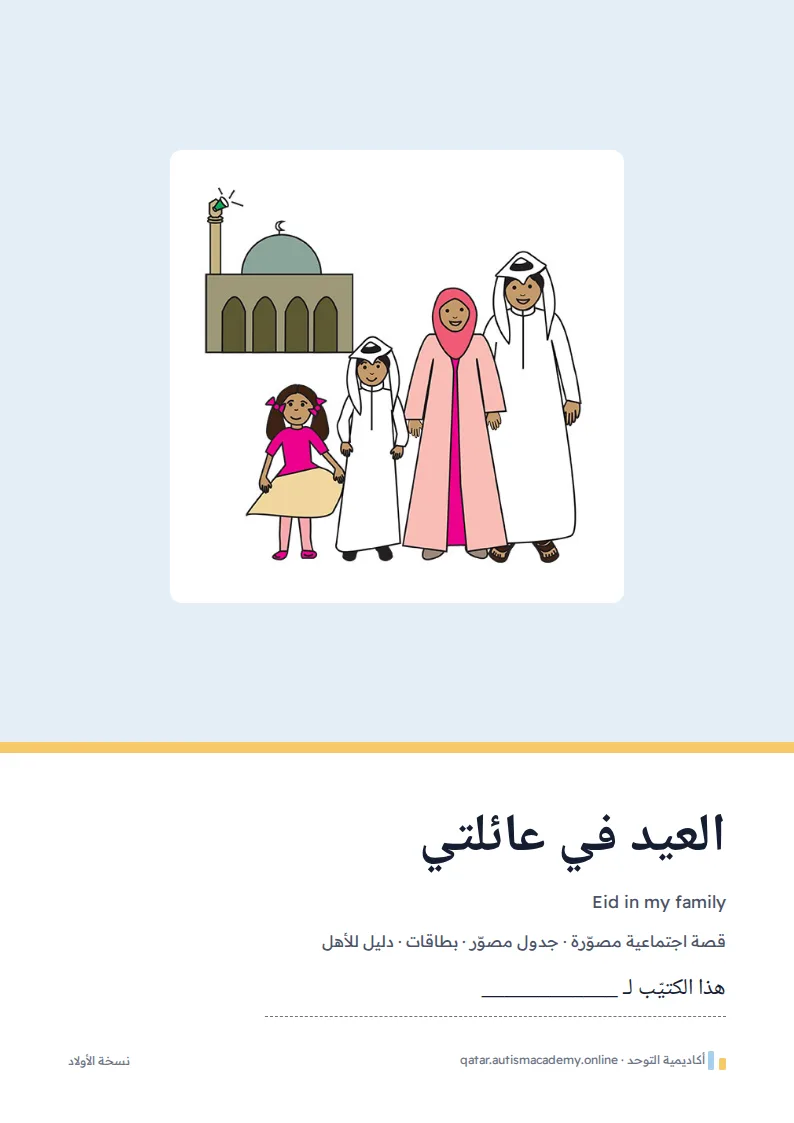
Eid in my family
A visual story, countdown and schedule for Eid day: new clothes, Eid prayer, visits, eidiya, and gentle ways to greet without kissing.