Umrah
A visual story and schedule for Umrah with the family: ihram, the Masjid al-Haram, tawaf and sa'i, calmly and safely.
For families who have decided to take their child on Umrah and want to prepare them for crowds, heat, new clothes and new steps.
In this pack
- Visual story, 14 pages
- Visual schedule, 9 steps
- 3 cards to cut out
- Parent guide in Arabic and English
- Boy and girl versions
Sample pages
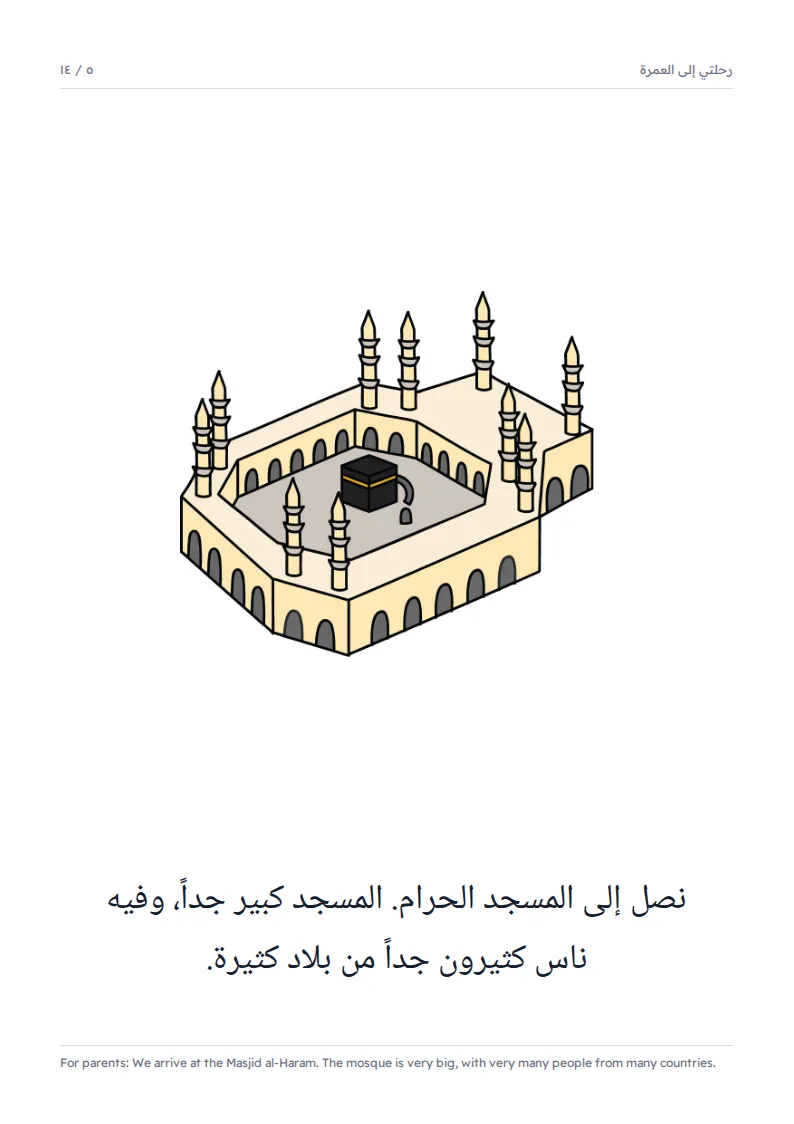
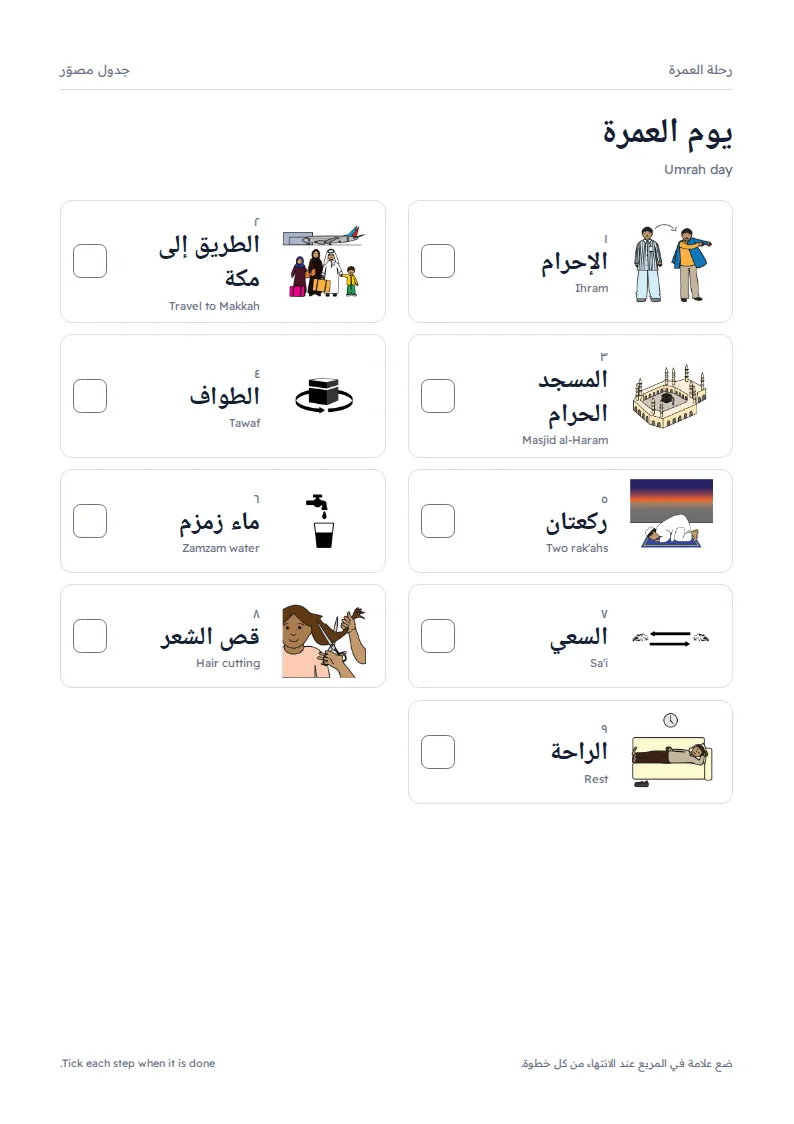
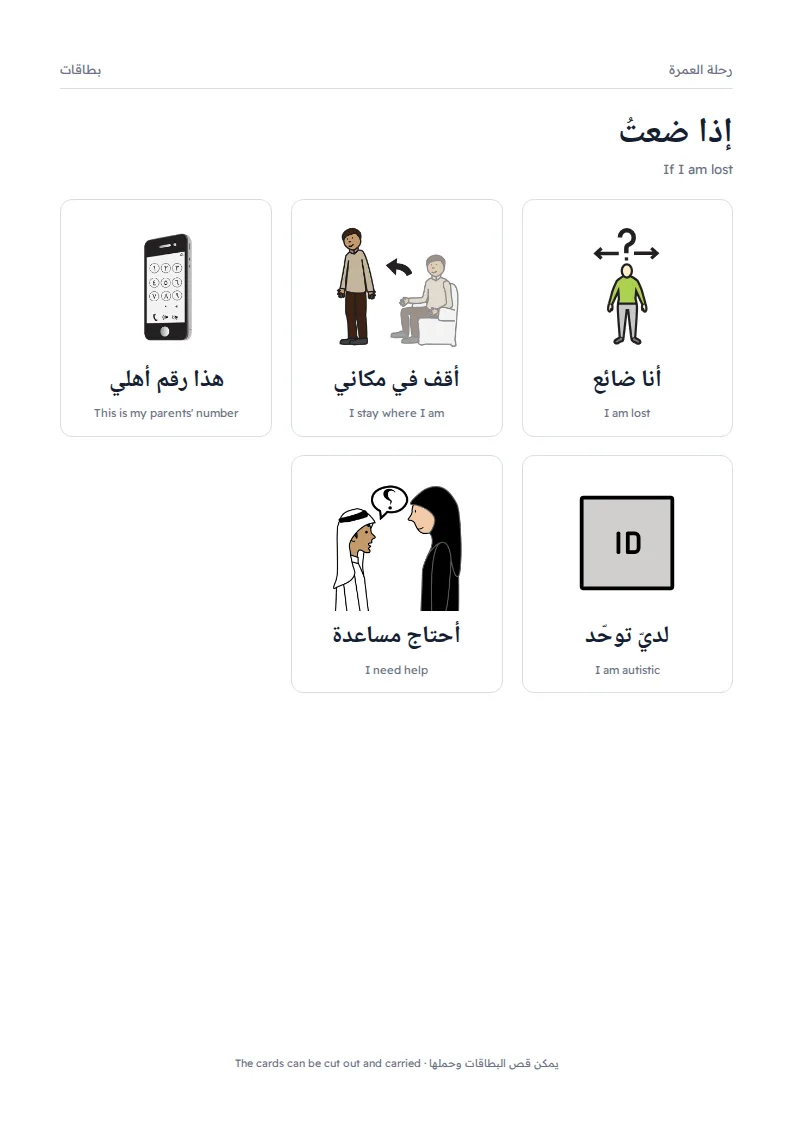
From the story, translated from the Arabic
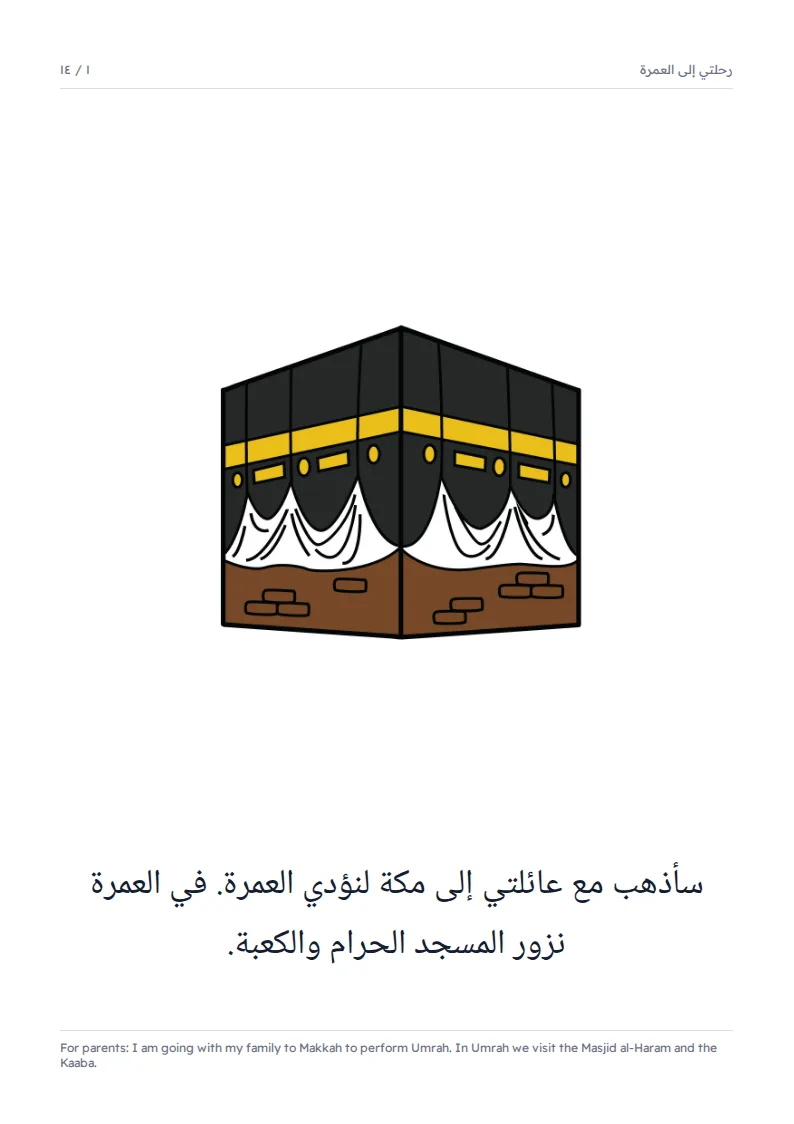
- I am going with my family to Makkah to perform Umrah. In Umrah we visit the Masjid al-Haram and the Kaaba.
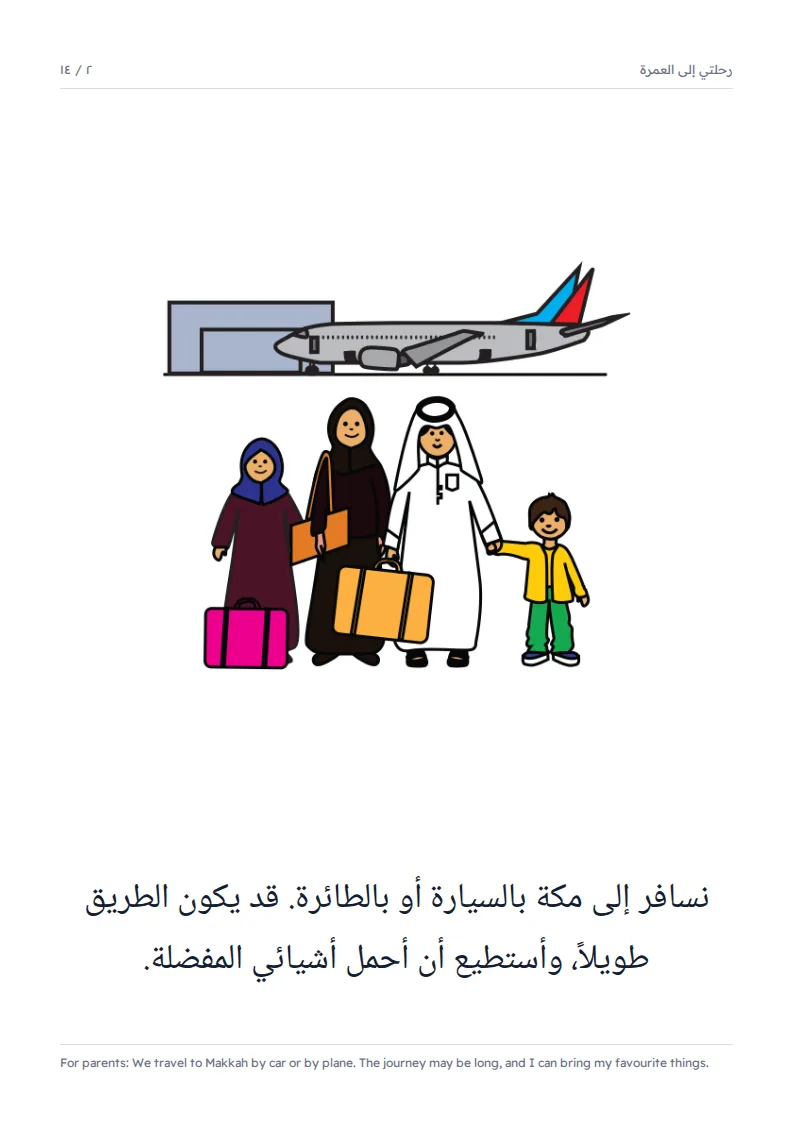
- We travel to Makkah by car or by plane. The journey may be long, and I can bring my favourite things.
- Boy: Before Umrah I put on ihram, two pieces of white cloth. The cloth may feel strange or move, and my father helps me arrange it. Girl: Before Umrah I wear loose, modest clothes. My mother helps me choose them.
- My family explains what we do and what we avoid in ihram. Together we say: Labbayk Allahumma labbayk.
From the parent guide
Before you decide
Umrah is not obligatory for a child who has not reached puberty. Still, many mothers and fathers wish to take their children, and each family decides what is possible for their child and for themselves. It is perfectly fine to keep the visit short, to wait until your child is older, or for the child to stay with a relative at the hotel at the busiest times.
One parent can also perform Umrah while the other stays with the child, and then they swap. What suits your child is the right choice for your family.
Why Umrah can be hard
The Masjid al-Haram can be very crowded. Heat, long walks, noise, being touched in crowds, new clothes and a broken routine can all be a lot for an autistic child. The ihram cloth may feel strange or rough for boys, and cloth that moves and slips can be very uncomfortable for a sensitive child.
The call to prayer and recitation can be loud in some places, and the walkways are busy with people and wheelchairs. A child who covers their ears or flaps their hands is trying to cope with what is around them; it is not a lack of respect.
How to use the story
Read the story several times in the weeks before travelling, calmly, and let your child hold it. Look together at photos or videos of the Kaaba, tawaf and sa'i. Practise at home: a boy wears the ihram for short periods, the child walks seven rounds around a table, and practises standing still if lost.
Adapt the story to your family: cross out pages that do not fit, change who cuts the hair, and add the name and photo of your hotel.
The full guide, in Arabic and English, is in the pack.
Other packs in this set
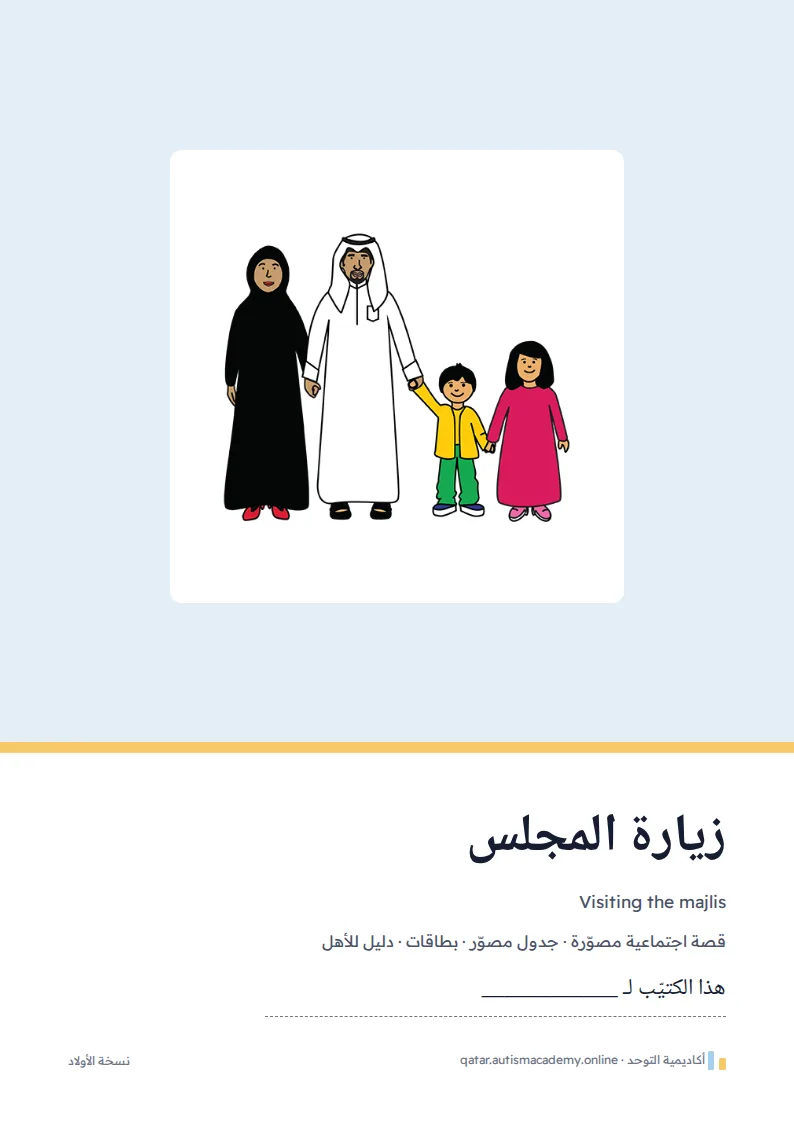
Visiting the majlis
A visual story and schedule for Friday lunch at the grandparents' house: relatives, greetings, coffee and crowds.
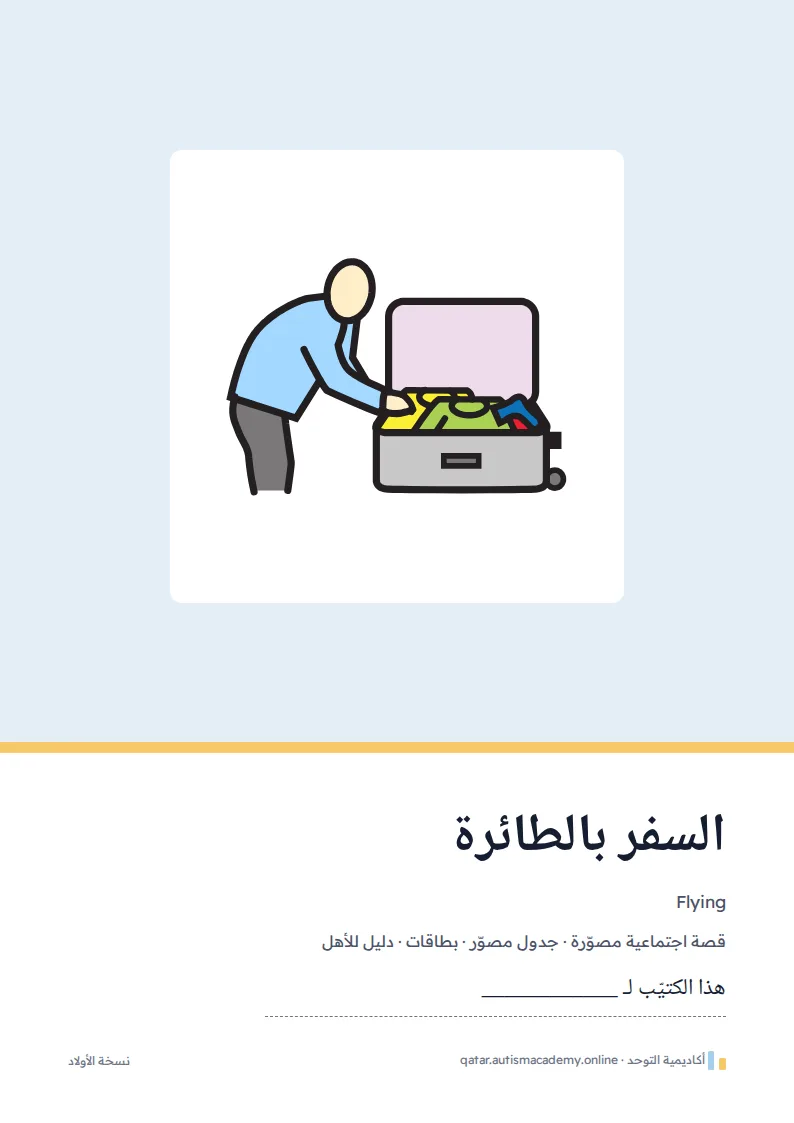
Flying
A visual story and schedule for a plane trip, step by step: from packing to arriving.
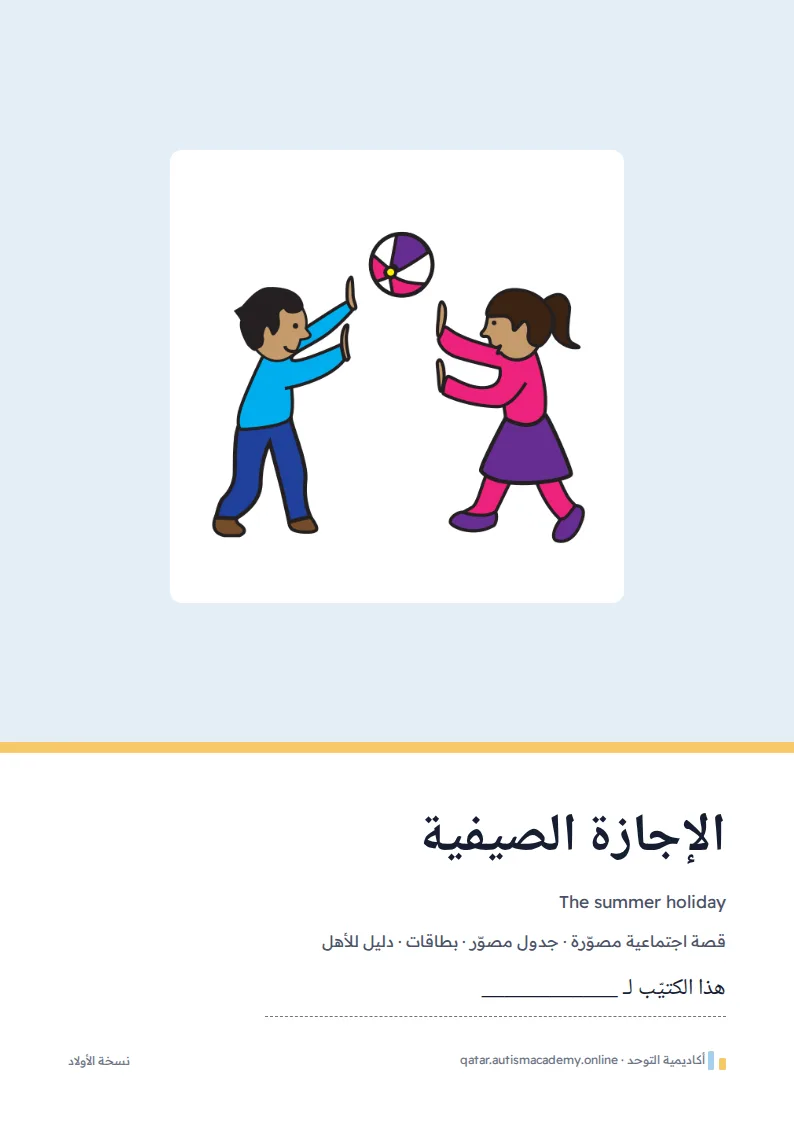
The summer holiday
A visual story and schedule for the long summer holiday, with a countdown back to school.